Syria's recovery up close
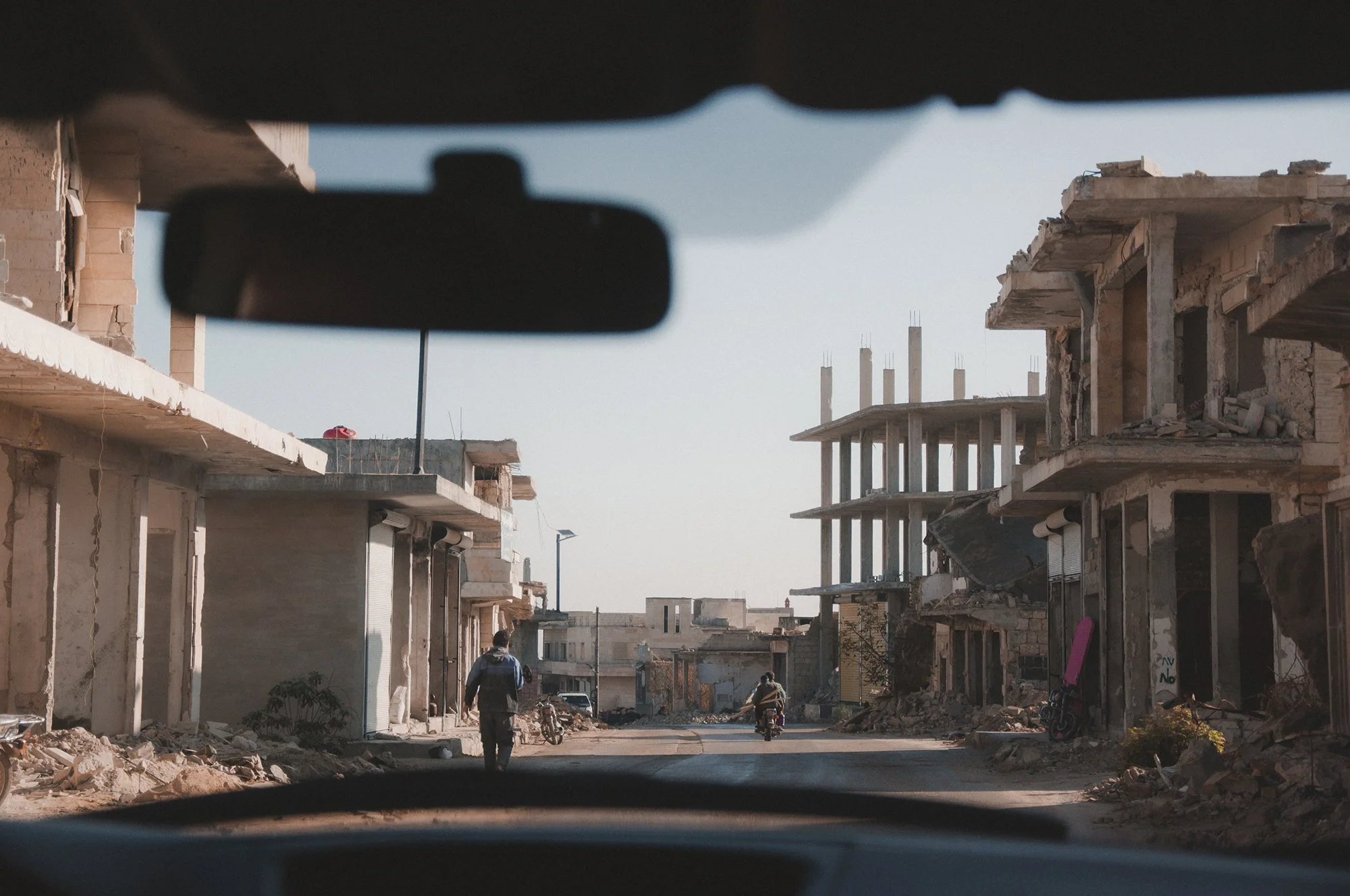
Driving from Maar Tahroma to Aleppo
In November, our team travelled to Syria to visit project sites and speak directly with the people keeping hospitals, schools and communities running. The visit came as our support is expanding: a 128 kWp solar system for Idlib University Hospital is currently on its way, alongside another two containers of medical supplies worth more than $500,000.
We’ve supported partners inside Syria since 2023, but this was our first chance to visit in person and experience what recovery looks like nearly a year into the liberation. Over several days, we moved through Aleppo, Idlib, Bab al-Hawa, Maarat al-Numan, Damascus, Arbin and Daraa. Signs of rebuilding are everywhere but so are the gaps: power cuts, stalled supply lines and basic items that remain unevenly accessible. With reconstruction funding scarce in every area we visited, every contribution matters and leveraged procurement can help stretch each one further.
Conversations that stayed with us
One of our partners, Mustafa Al-Haj - founder of Tuyoor Al Amal, a network of schools supporting refugee children in Lebanon - showed us around his hometown, Maar Tahroma. The town was almost entirely destroyed after years of continuous bombing between 2011 and 2019. Walking through the ruins, Mustafa spoke about what it means to work with children who have only ever known displacement, and how much of his work has been about keeping one idea alive: that returning home could be possible one day.
That hope has come at a personal cost. Mustafa’s brother was killed when their family home was hit by a bomb. Today his brother’s wife and children have returned, living among the remains of what was once their house as they slowly rebuild. The children are back in school too, but in buildings like the one seen below: damaged and exposed, without windows.
“I wanted to give hope to these kids that one day you will go back to your country and you will rebuild it again. And now, we are here. And though it is rubble, it gives you warmth and hope. The kids are moving around full of energy and smiling.. they are giving life a different meaning.”
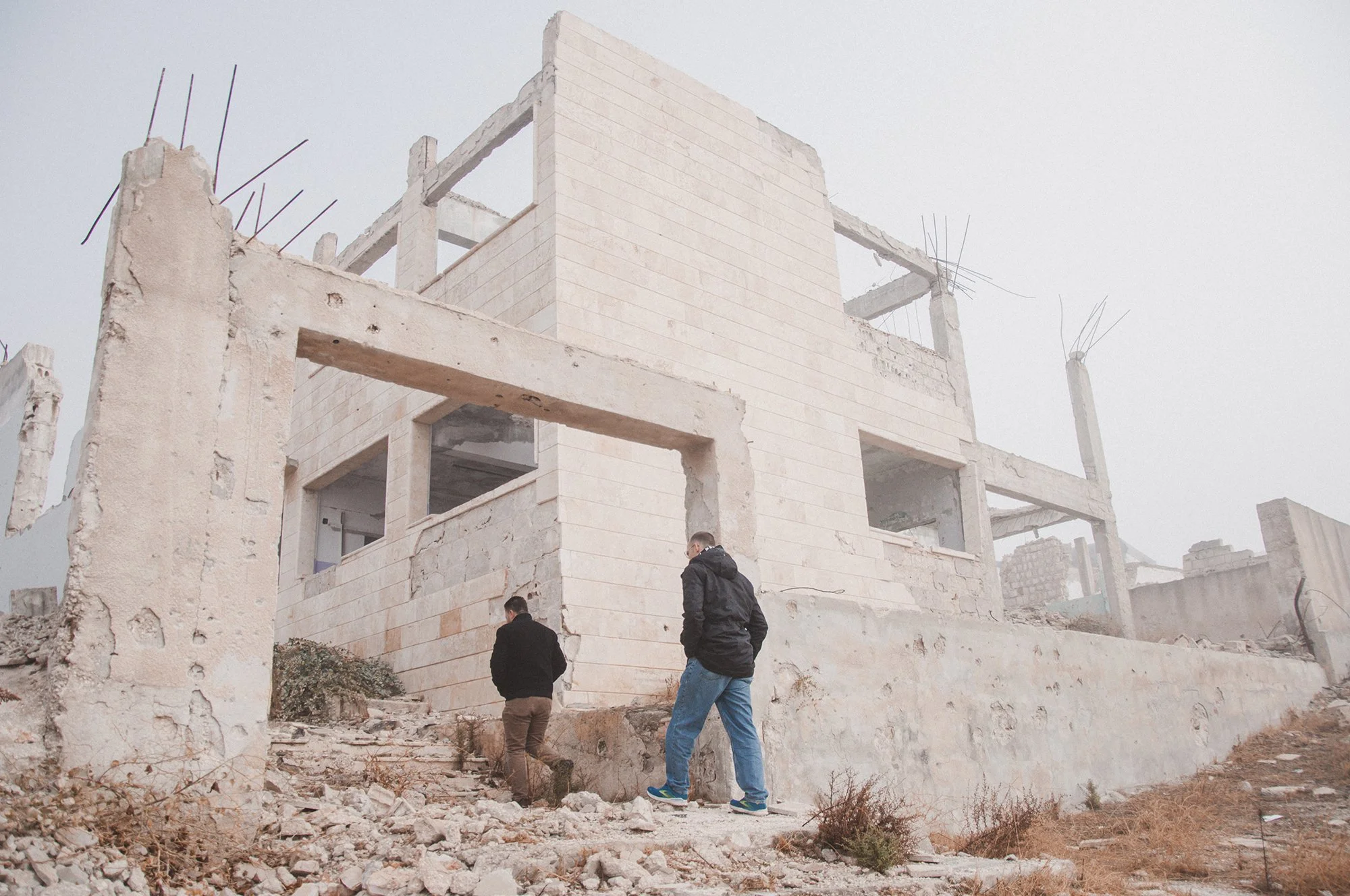
Mustafa Al-Haj showing us what used to be the main school building in Maar Tahroma
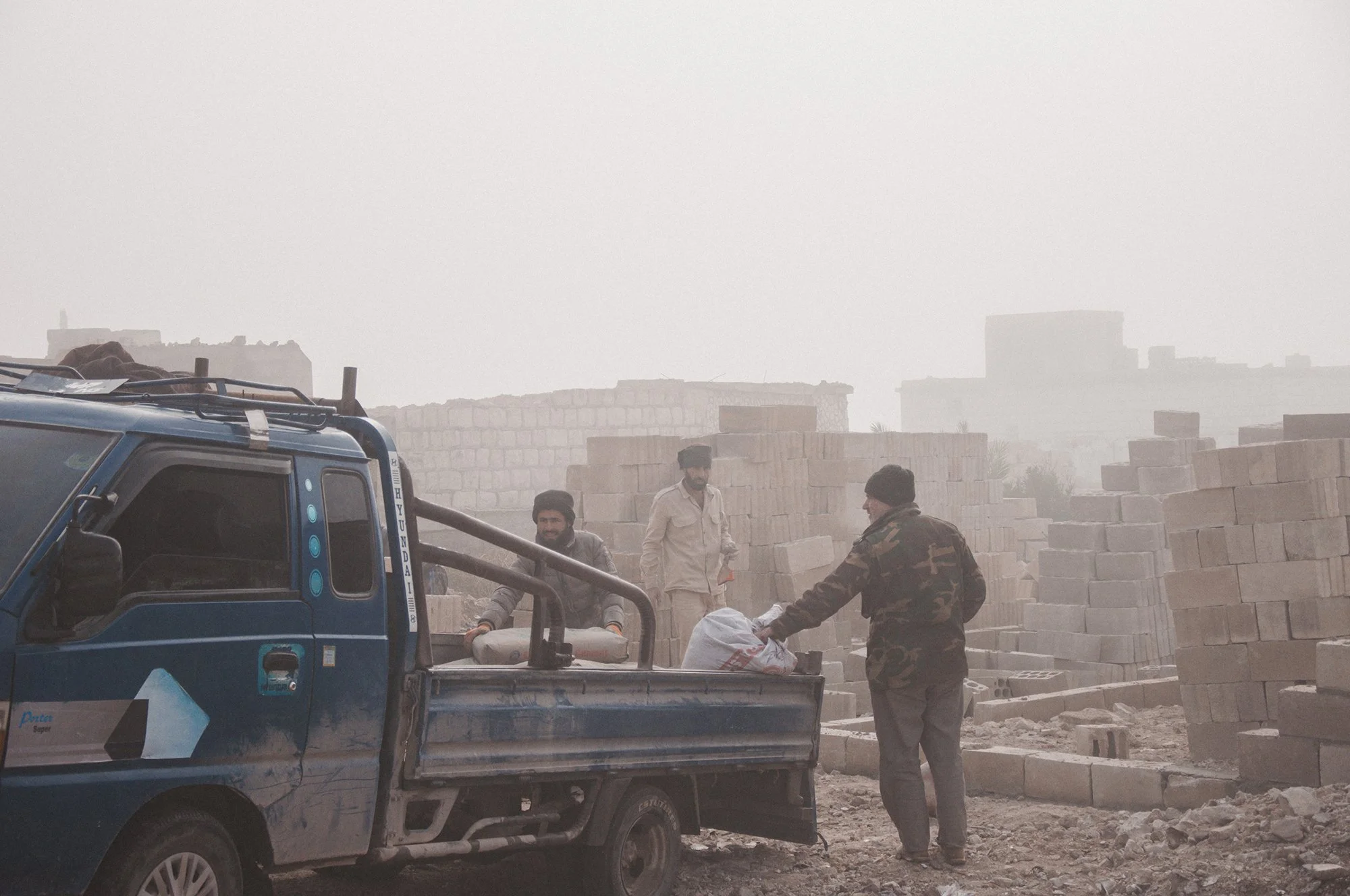
Rebuilding efforts in Maar Tahroma which was destroyed after continues bombings from 2011-2019
In Arbin, we met Ahmed Asmal, an orthopaedics specialist who had recently returned from Egypt and was volunteering at the primary health center.
“I came back to serve our nation and our people, we are doing our best but we are very short on supplies, consumables, syringes, needles and medication,” Ahmed told us.
Ahmed’s point comes up again and again: rebuilding is not only the reconstruction of buildings but also the day-to-day availability of essentials, and the ability to keep services running consistently. Basic medical consumables and solar supplies may be available, but when funding falls short, they become effectively scarce for clinics and communities who can’t afford to procure and replenish them. Without that reliability, families hesitate to return home.
Aid Pioneers began delivering medical supplies to northwest Syria in 2023, after the devastating earthquake. Since then, operating in Syria has meant navigating strict sanctions and financial barriers that slow procurement and complicate delivery. This work depends on trusted local partners such as SAMS and HiHFAD - teams who understand local realities and help ensure support reaches the hospitals that need it most.
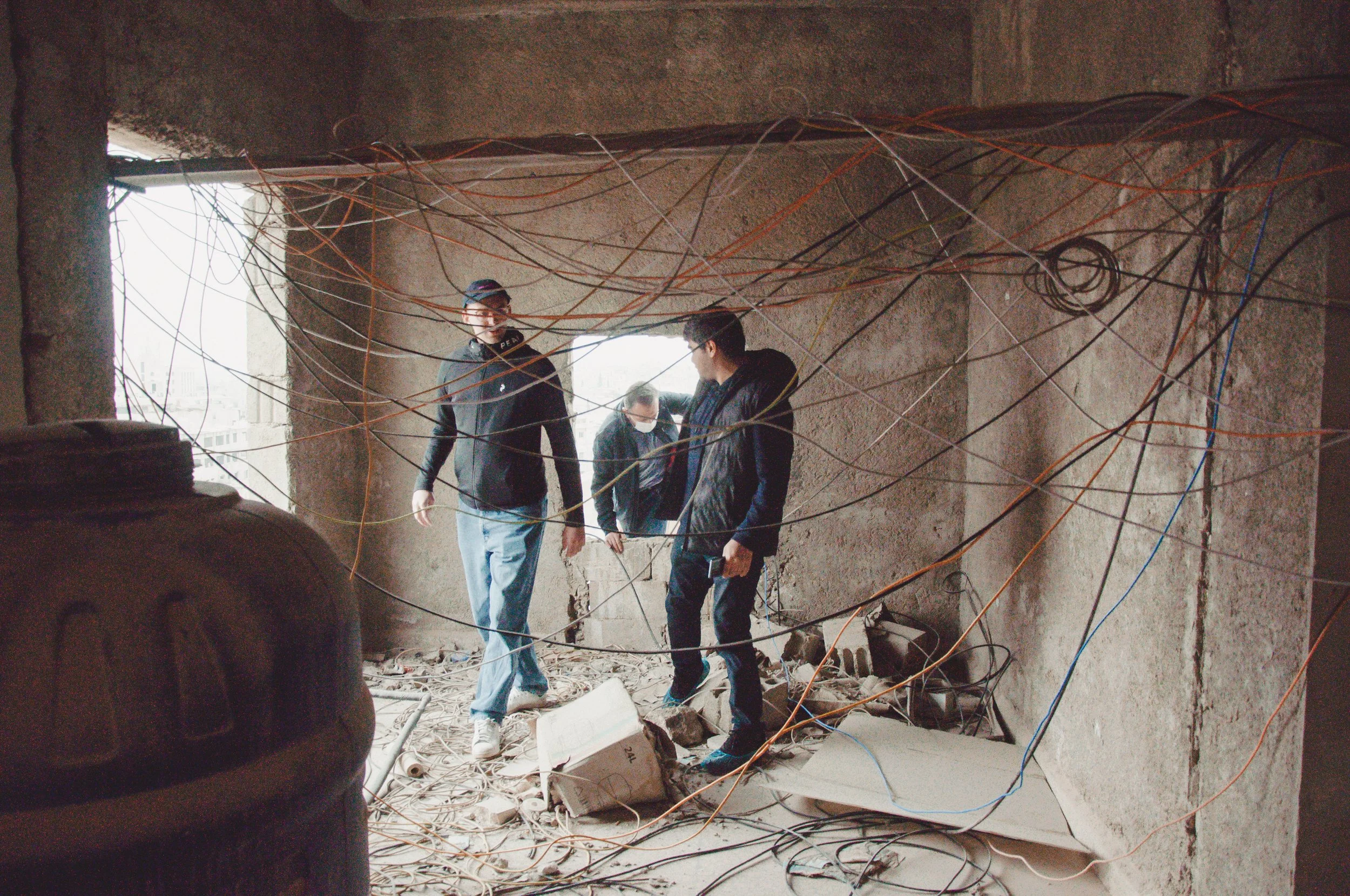
Assessing the roof of Idlib University Hospital together with Dr. Samer Alahmad and the SAMS team
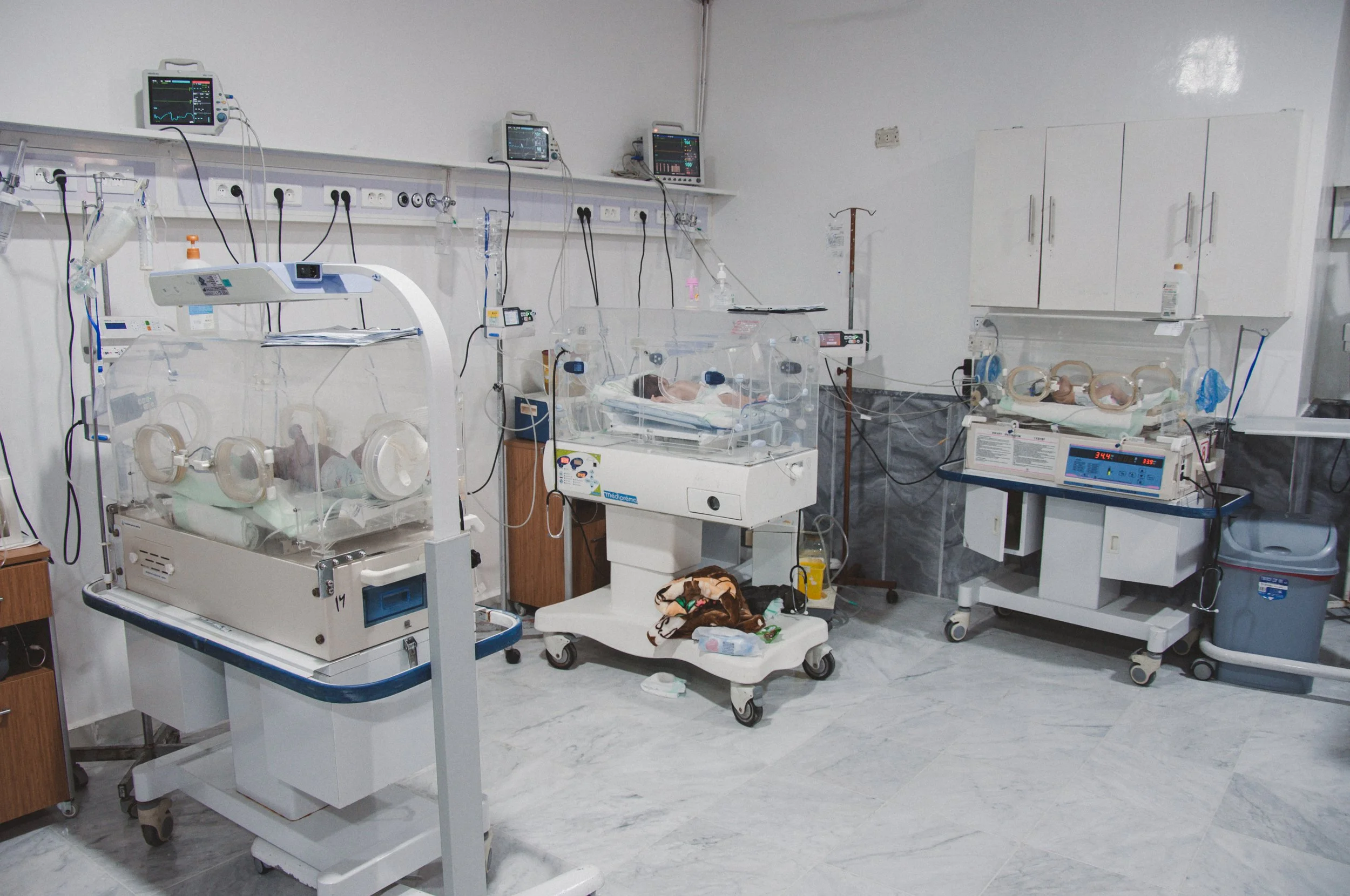
The neonatal unit at Idlib University Hospital which will soon be powered by our solar system
Our first solar installation in Syria
During our trip, we visited Idlib University Hospital together with SAMS. On 2. December 2024, the hospital was hit by missiles, damaging parts of the facility, including the ICU department. The unit is running again today, but vital operations still depend on unreliable electricity.
That is why our first solar installation in Syria will support this hospital. Once installed, the system will strengthen reliability for a hospital that sees around 185,000 patient visits each month. It will also reduce energy costs, freeing up resources that can enable care for nearly 10,000 additional patients.
As part of our Solar Fund, the installation is made possible through a blended finance model built for places where high upfront costs are the main barrier to solar. We cover the installation upfront as a tailored mix of grant and loan, based on a local partner’s capacity. The partner then repays the loan portion in instalments set to be lower than their previous energy costs over three years, meaning that the installation creates immediate monthly savings.
Alongside this solar project, two shipments of medical goods is planned to arrive in early 2026, supporting several hospitals across the northwest.
In the year ahead, we want to support more people like Ahmed, who keep clinics running day by day, and more families like Mustafa’s, so they can return with a sense of safety.
The World Bank estimates Syria’s reconstruction needs at $216 billion after more than 13 years of conflict. Closing that gap will take committed partners and supporters coming together.
Join us by donating or becoming a partner.
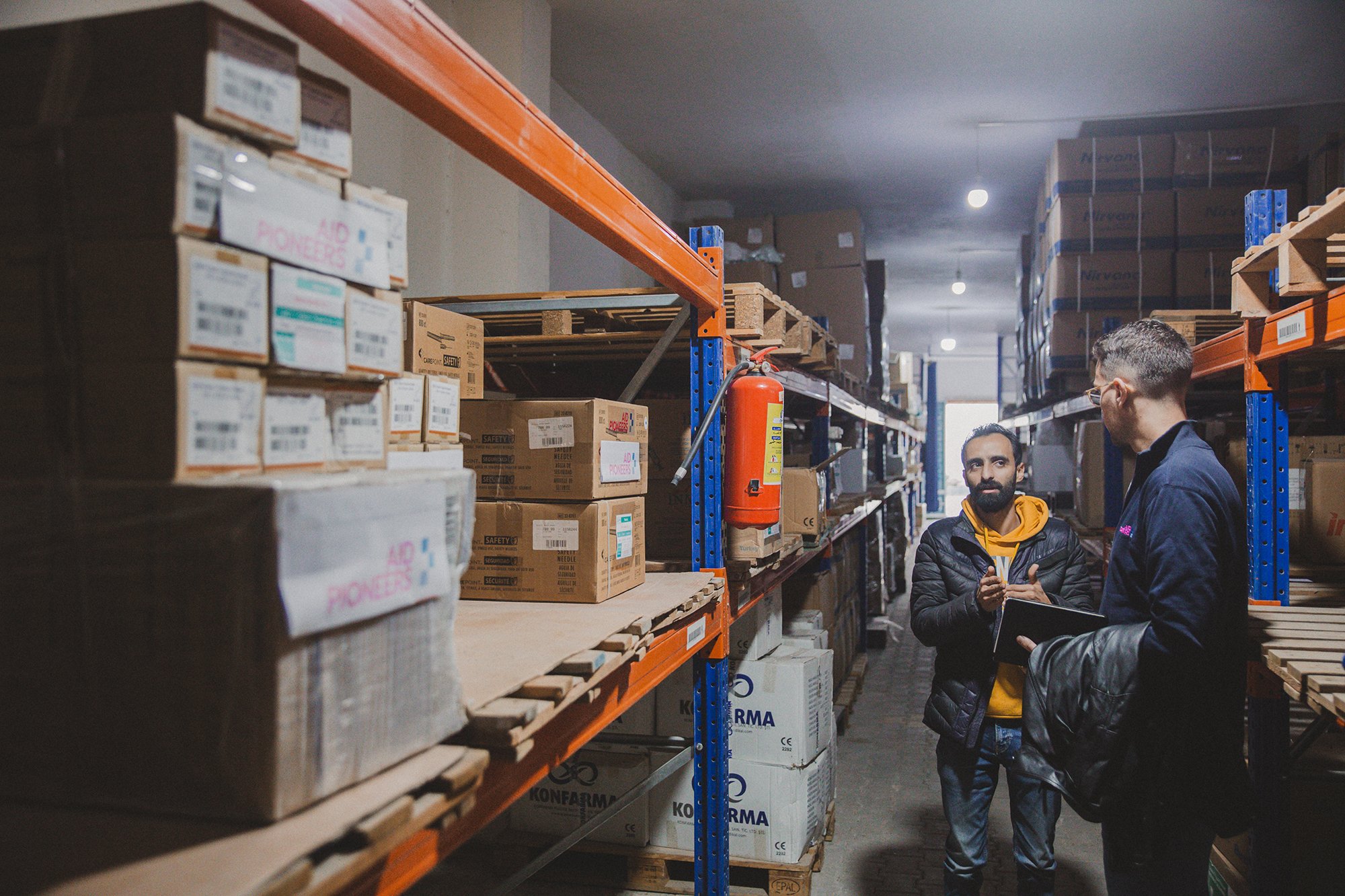
Hassan Alam (HiHFAD), showing us around the warehouse in Bab Al Hawa, where most of our medical supplies are delivered and distributed.
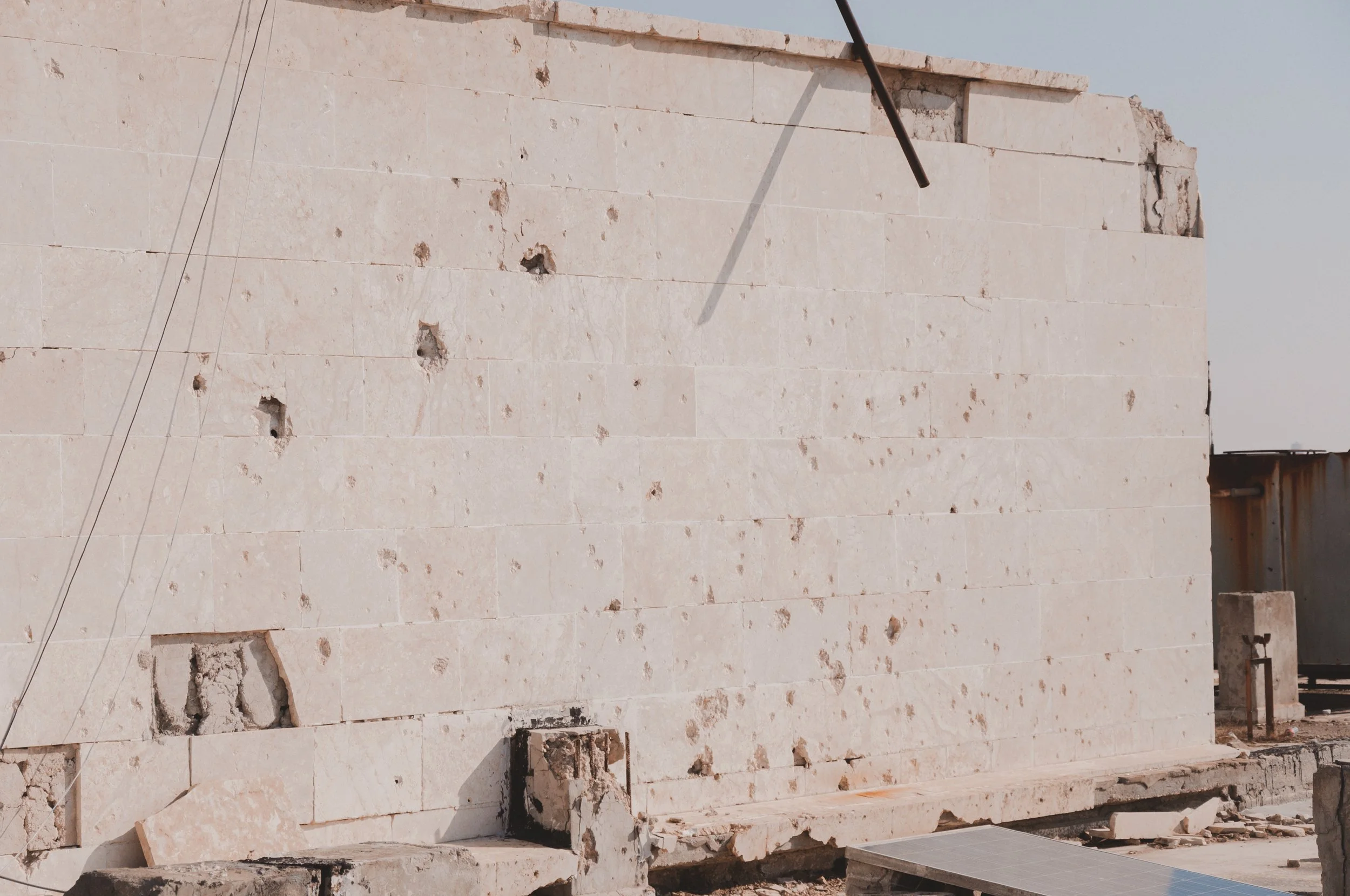
Maarat Al Numan Hospital carrying the scars of the civil war
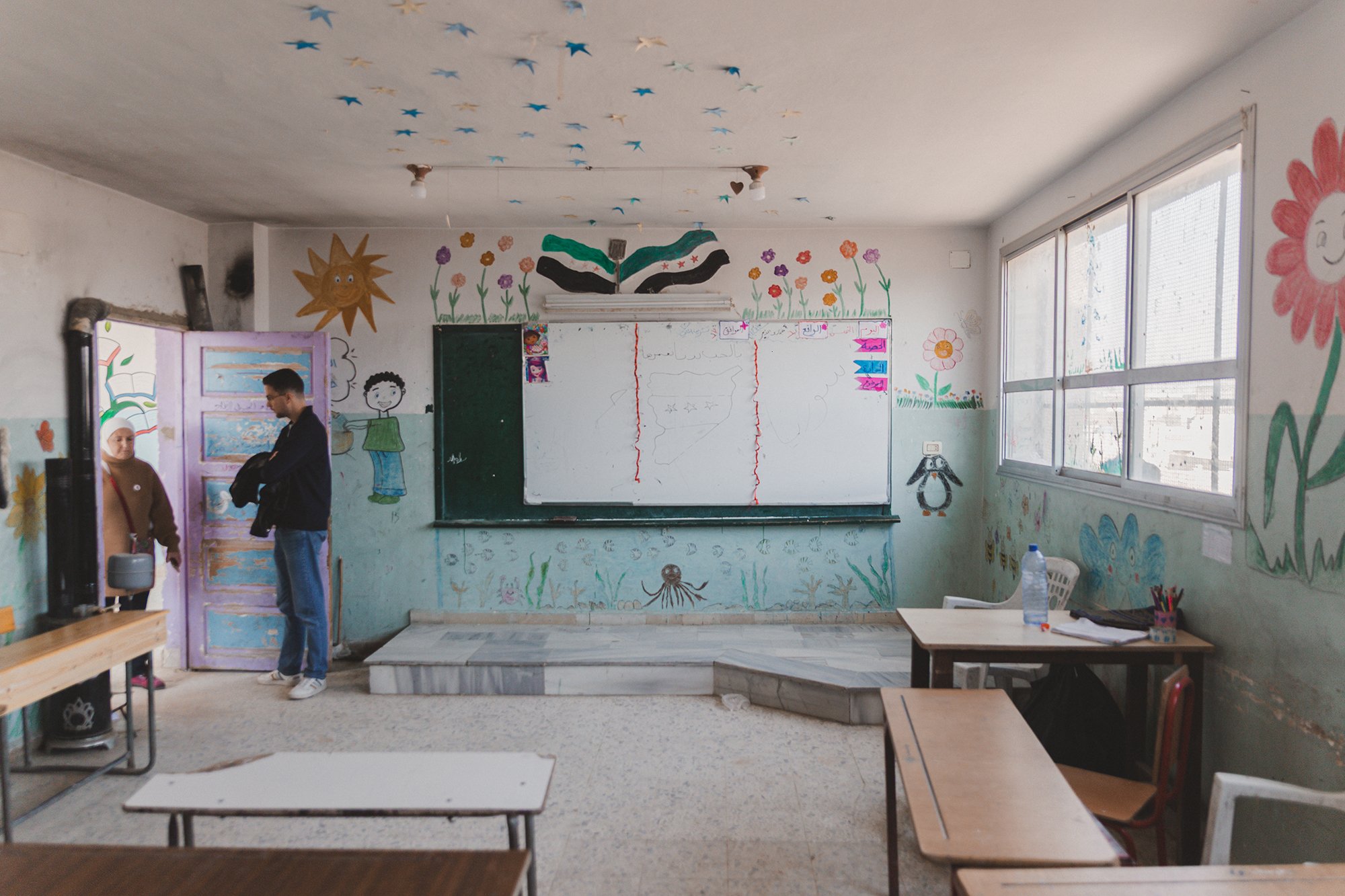
Visiting a primary school in Al Nashabiyah
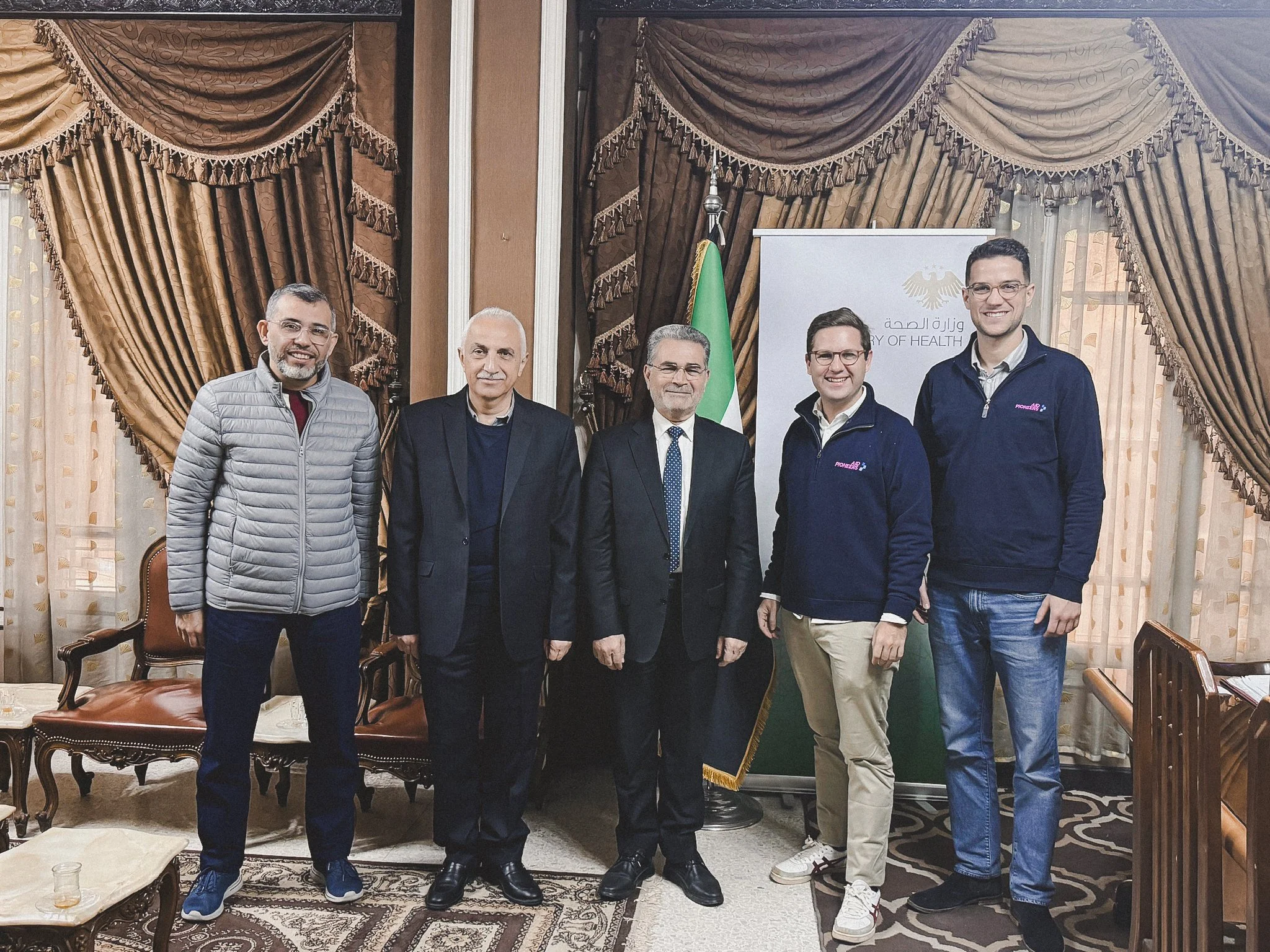
Meeting with the Department of Health in Aleppo
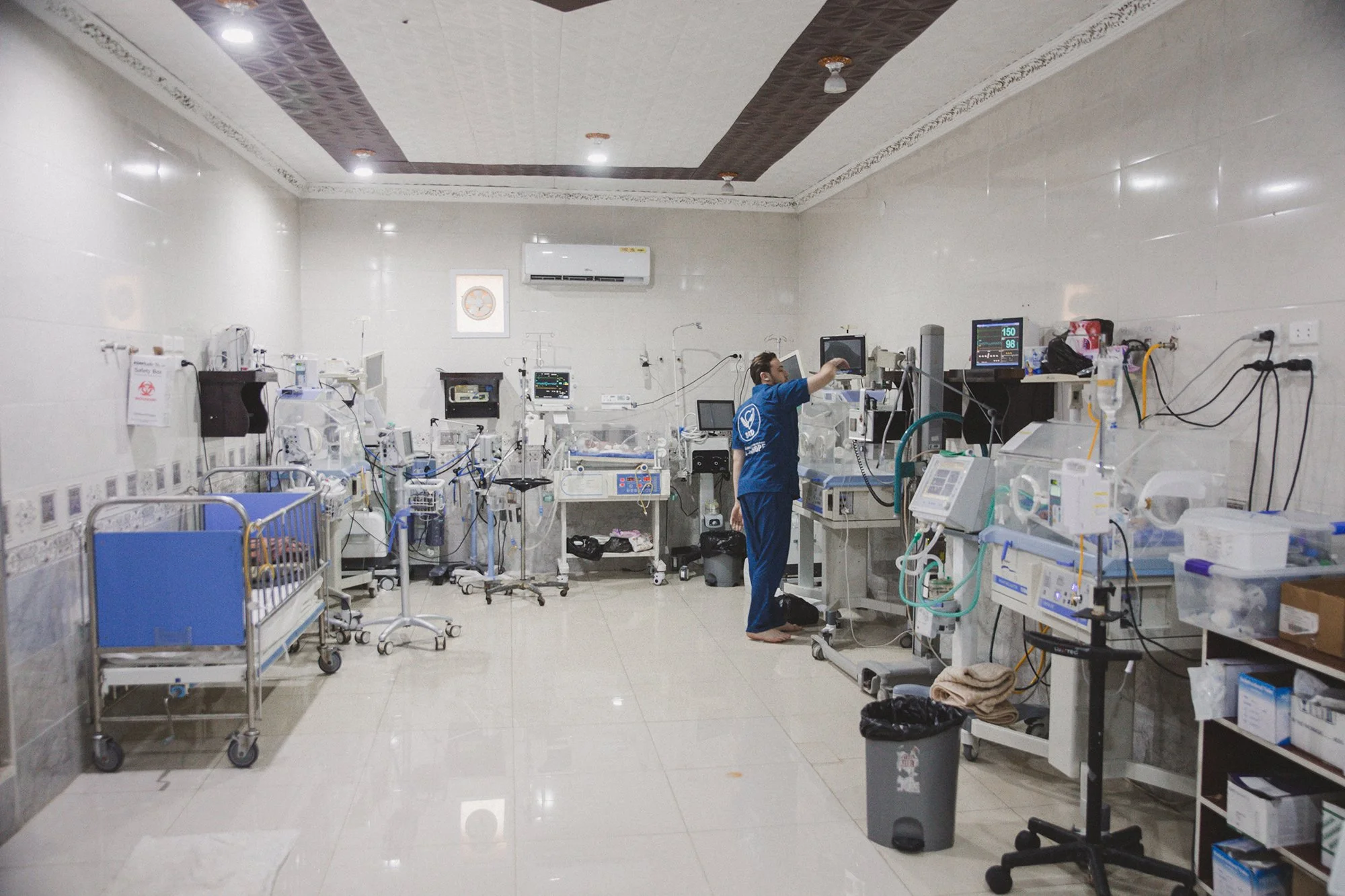
The ICU unit at Al Ferdoush Hospital, Aleppo
