

In Qalamoun, darkness no longer decides who gets to learn
The school day in Qalamoun doesn't end when the sun sets. For refugee children in particular, afternoon and evening classes are the only educational option available. Yet until recently, Lebanon's failing grid system made this impossible.
Located on the outskirts of Tripoli, Qalamoun School serves nearly 900 students, including children who are part of the large Syrian refugees population. Lebanon's electricity grid delivers just two hours of power daily in many areas. This means that when daylight fades, classes can’t run, even if teachers are willing to stay.
Why the afternoon shift matters
Our longtime partner Al Manhaj, a Lebanese organization, runs Qalamoun and other schools across Tripoli, Lebanon. Their classrooms serve many children without valid residency papers, a population largely excluded from Lebanon's public system.
Lebanese policy continues to require non-Lebanese students to present valid residency permits or UNHCR certificates to enroll in public school. Tens of thousands simply don't have these documents. Human Rights Watch reports at least 28,000 children were turned away from public education last year alone. Additionally, UNHCR registration has been suspended since 2015, leaving an estimated 1.3 million Syrians in Lebanon without legal status.
As a result, roughly half of displaced Syrian children have no access to formal schooling. Without education, they face limited employment prospects, increased vulnerability to exploitation and a cycle of poverty that spans generations. Community-run schools like Qalamoun are therefore essential, but community commitment alone can't overcome an infrastructure collapse.
Power as access
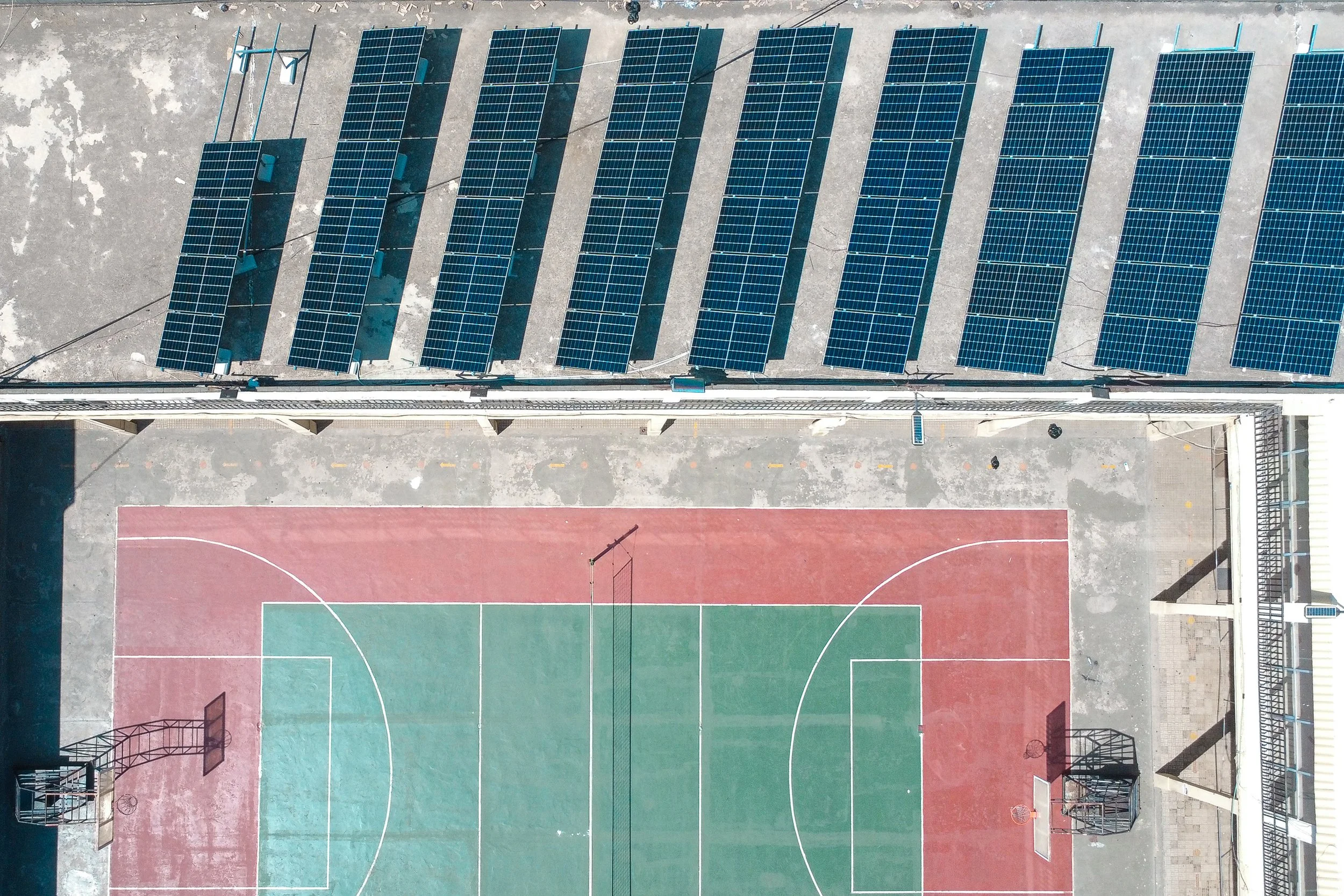
Together with Al Manhaj, we recently installed a 20 kWp solar system with 41.6 kWh battery storage at Qalamoun School. The installation was completed by Z.S. Energy under Wassim Arraj's leadership and generously funded by Solarspar.
Before the installation, 879 students aged 4-14 attended Qalamoun (233 in the morning shift and 646 in the afternoon). The afternoon program in particular ran on borrowed time, constantly threatened by power cuts that forced classes to stop abruptly.
Now classes run reliably into the evening. Over the next ten years, stable electricity will enable the school to accept an additional 671 children while ensuring current students never lose learning time due to grid failures. Additionally, the system will save the school €14,850 annually in diesel costs - funds that instead can be redirected toward teacher salaries and scholarships.
This is our sixth solar project with Al Manhaj across northern Lebanon. Each one addresses the same fundamental barrier: energy access determines educational access.
Learn more or get involved
Access to power shouldn't be a privilege. If you'd like to support similar projects or explore partnership opportunities, visit our project page or get in touch. Through collective efforts, we can ensure that darkness doesn’t get to decide who gets to learn.
“We are very pleased with the successful completion of this project. (...) It’s inspiring to see how our joint effort not only provides clean energy but also creates new opportunities for the local community. Our sincere thanks go to AidPioneers and Al Manhaj for their outstanding work and dedication on the ground.”
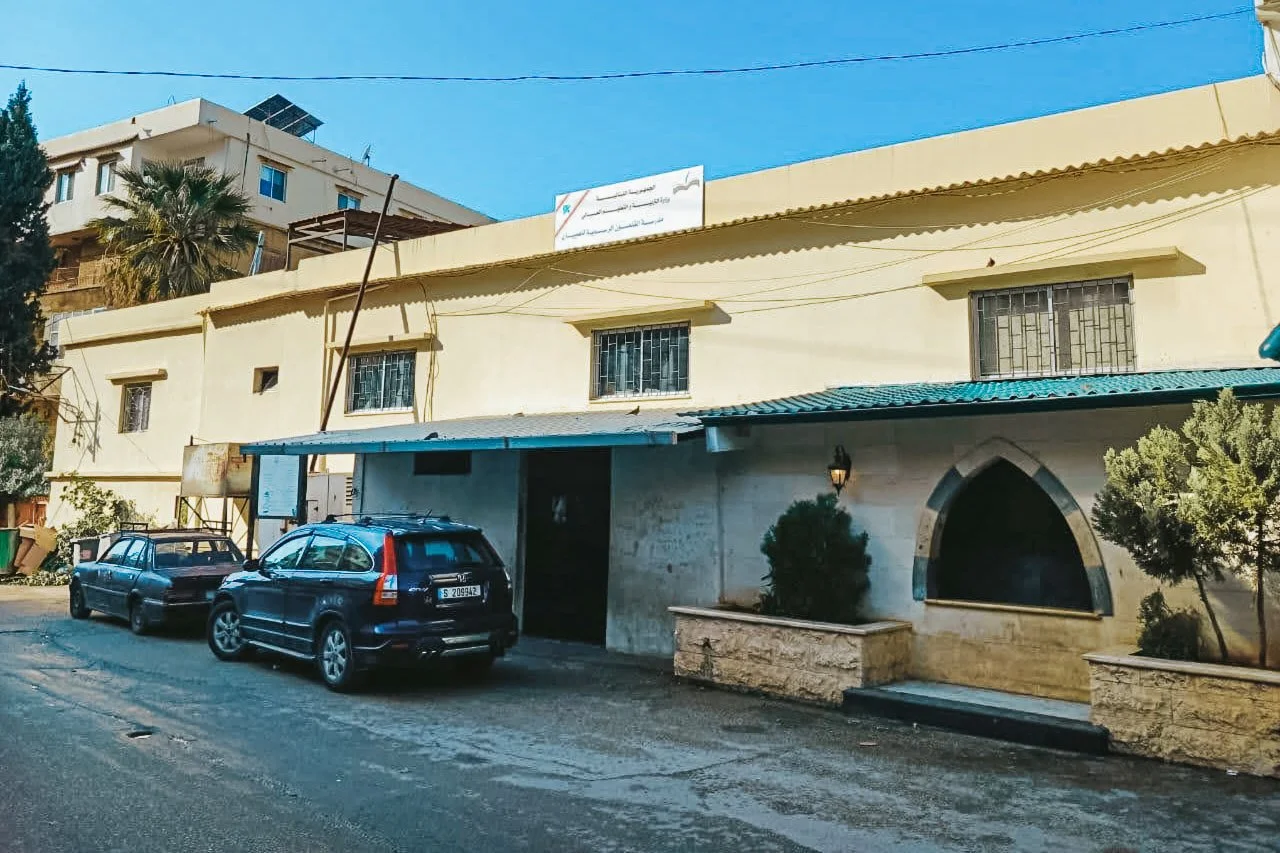
The entrance where nearly 900 students arrive each day to attend Qalamoun School
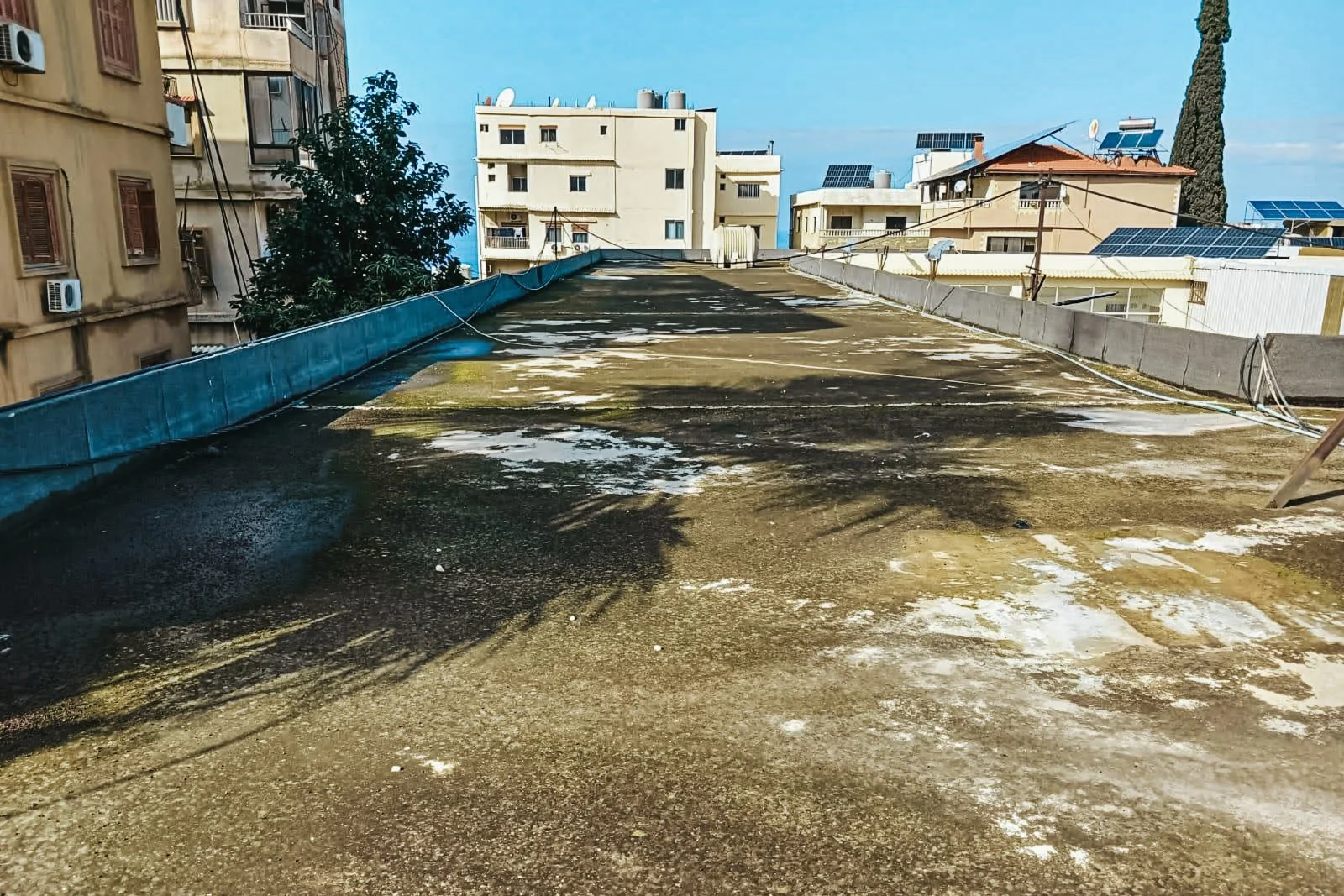
The roof of Qalamoun school prior to the installation
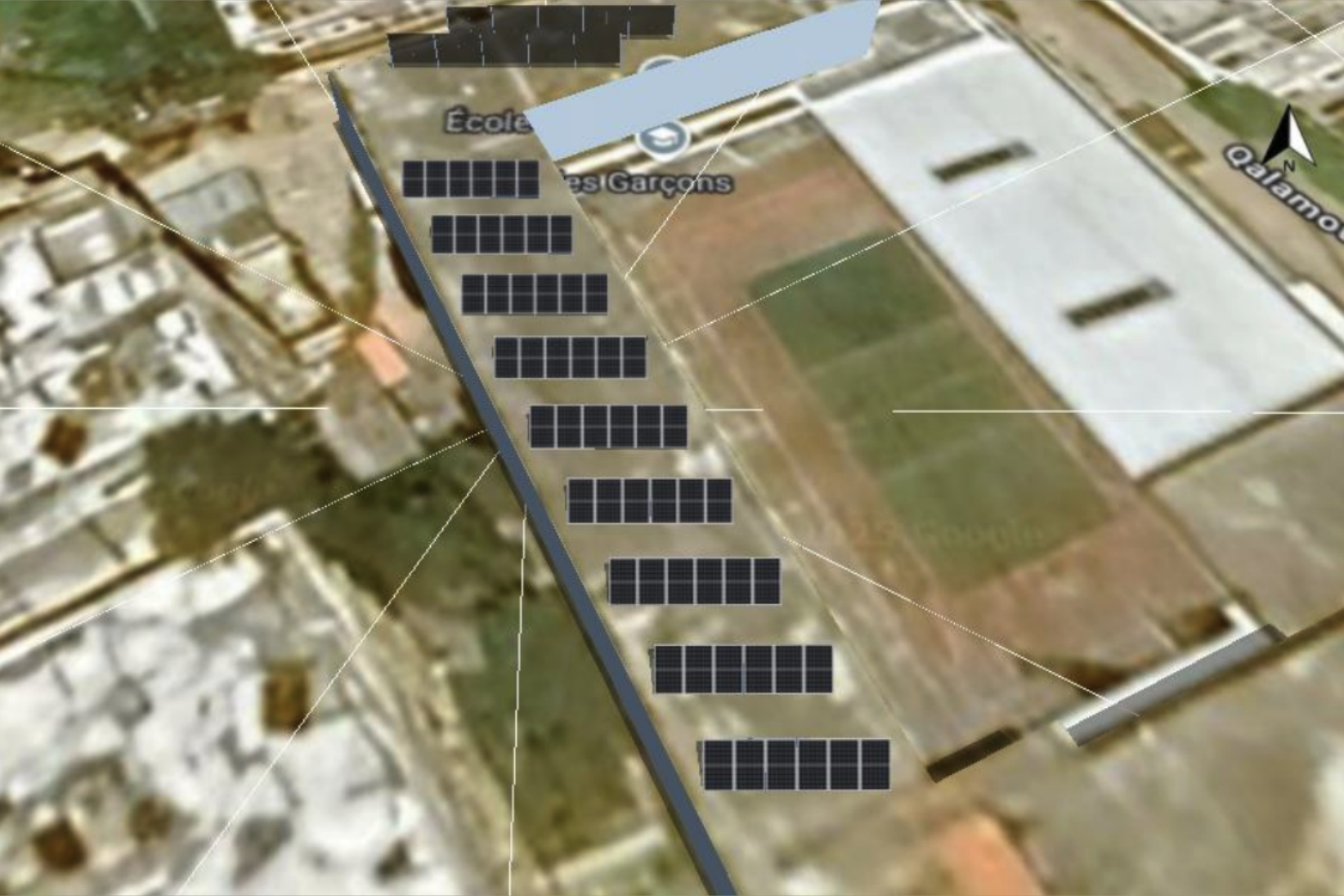
One of many figures used throughout the design process to optimize the 20 kWp system for Qalamoun's energy needs.
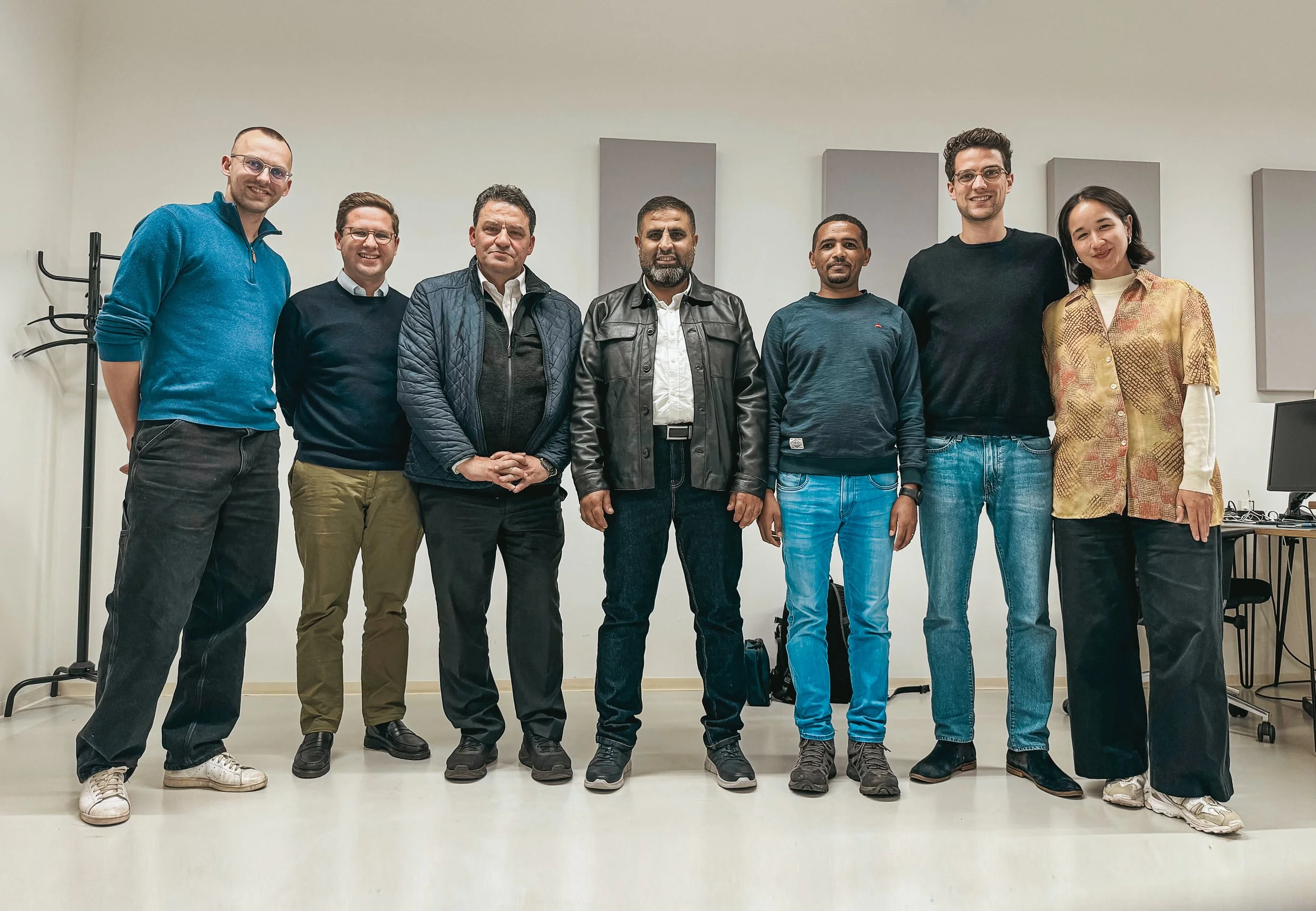
Dr. Mahmoud Al-Ahmad, General Manager at Al Manhaj (center), visiting our Berlin office, accompanied by his translator, Nazih El Ahmad.
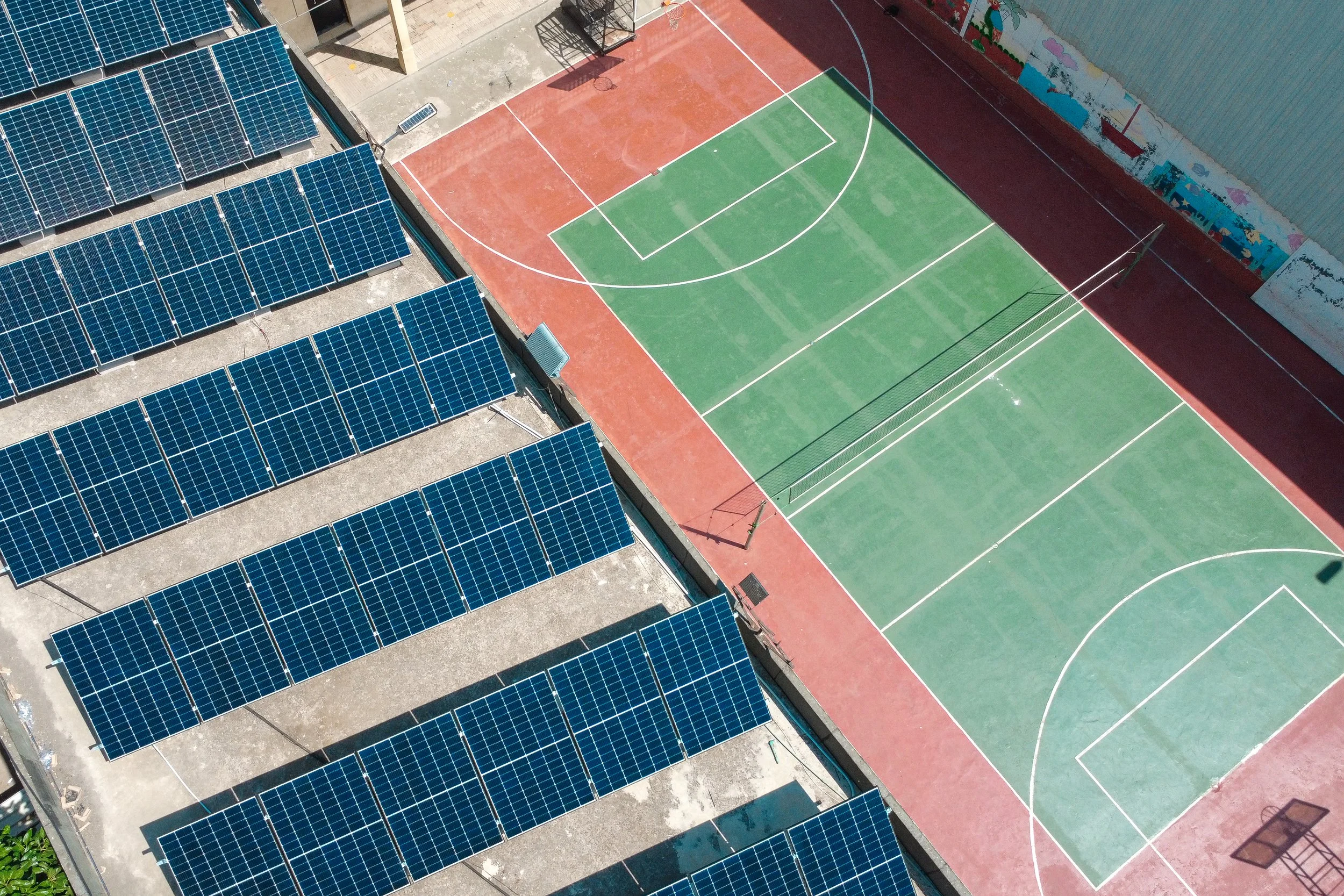
The completed solar installation covers 71.4% of the school's electricity needs, enabling afternoon and evening classes that were previously not possible.
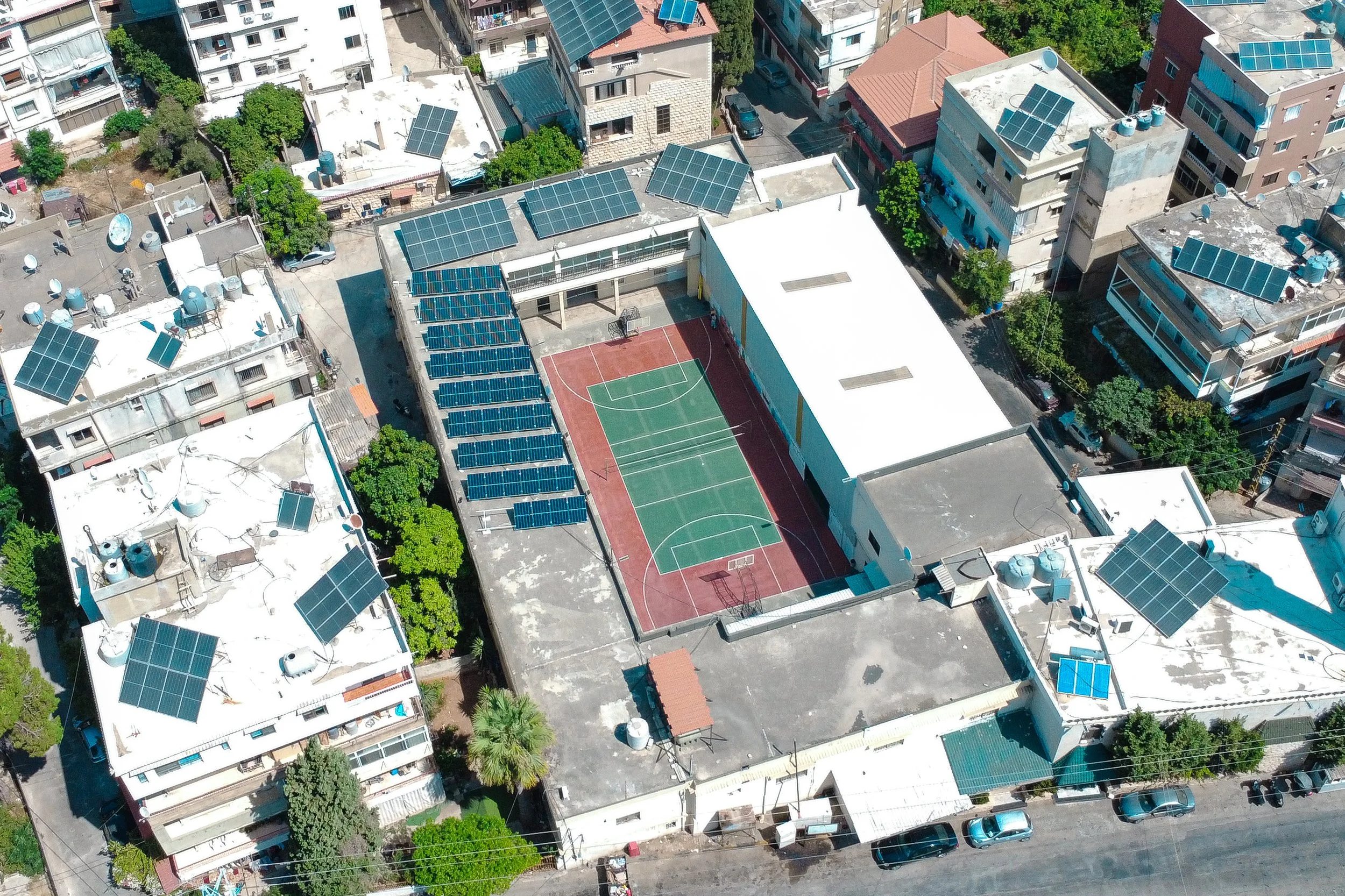
Installed at 30 degrees across the school's roof to capture maximum sunlight, the system generates 27.51 MWh annually while saving the school €14,850 in diesel costs each year.
