Solar power for Syria's critical wards
Idlib University Hospital serves nearly 3 million people but spends €12,000 every month on energy costs alone. Working with our local partner SAMS, we installed 128 kWp of solar across the hospital’s most critical departments, including Syria's largest neonatal intensive care unit. Through our Solar Fund, we created a financing structure that lets the hospital save money from day one. With monthly energy costs nearly halved, around €431,000 saved over the next 10 years, those resources can now go directly towards patient care.
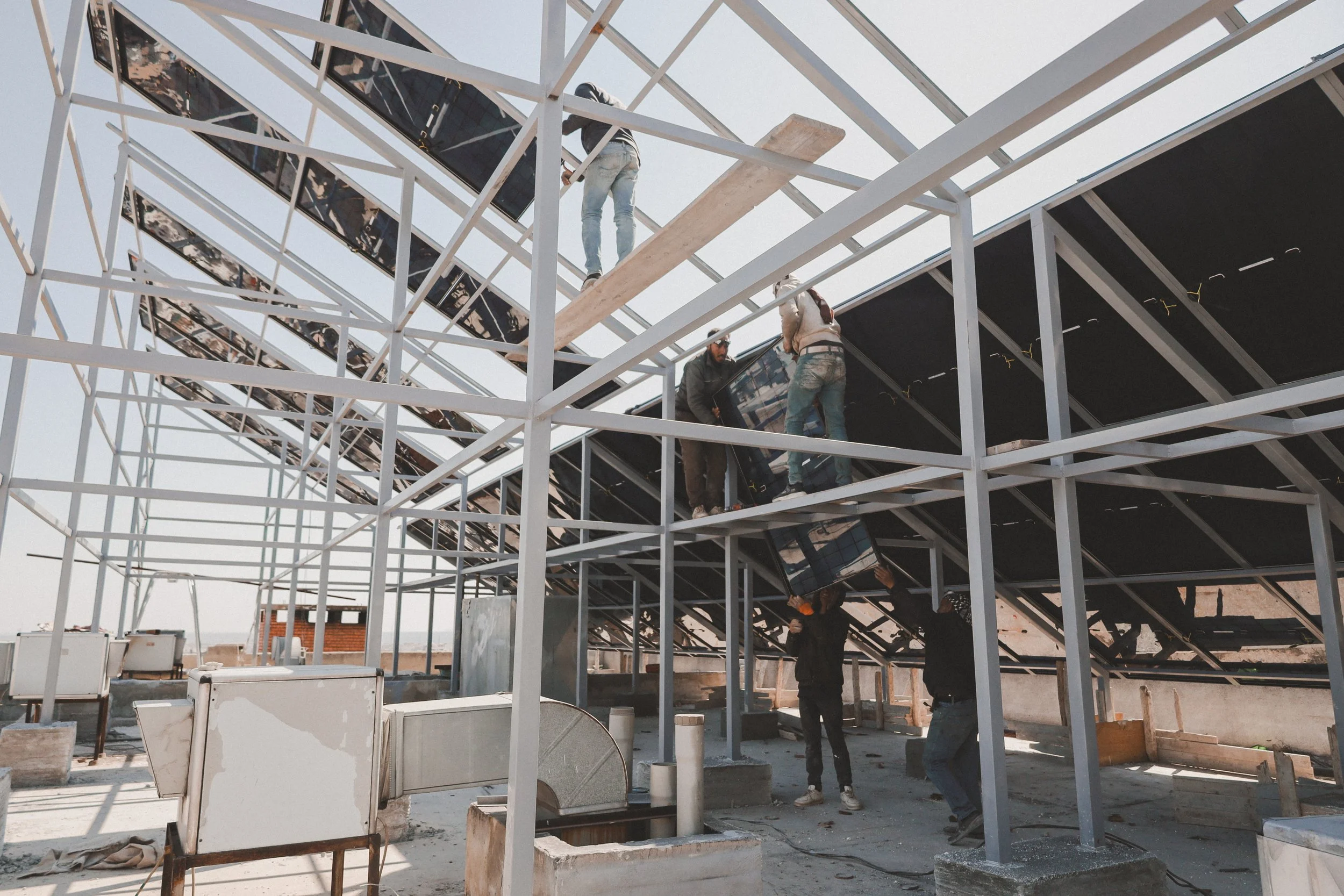
128 kilowatts of solar power, taking shape on the roof of Idlib University Hospital.
A hospital under attack
At around midday on December 2nd 2024, missiles struck Idlib University Hospital in northwest Syria. In a last desperate cling to power, Syria’s former dictator Assad set out to destroy basic infrastructure like Idlib University Hospital to weaken the protesting population that was contesting his power. The blast tore through parts of the building, including the (neonatal) ICU department. Footage from the incident shows a towering cloud of smoke rising above the building as people rushed to put out fires in the street below, rescuers and hospital staff rushing to help patients amongst the dust and debris.
Less than a week later, Bashar al-Assad had fled the country, ending more than five decades of Assad family rule, and setting off a wave of change that continues to unfold today.
Our visit one year later
In November 2025, our team visited Idlib University Hospital alongside our local partner Syrian American Medical Society (SAMS). We walked through the very ICU ward that had been struck just eleven months earlier. This unit, Syria's largest neonatal intensive care unit, was now up and running again.
Though the unit was back in operation, power remained a serious and persistent challenge. The hospital relies on a combination of the national grid and diesel generators to maintain continuous electricity supply. A necessity given that even brief, unexpected outages can be immediately life-threatening in critical care settings. However, this comes at a steep cost: approximately €12,000 per month just to keep running. Standing in those rooms, surrounded by incubators, ventilators, infusion pumps, patient monitors, vaccine fridges, made the stakes immediately tangible.
"We deal with premature babies who are completely dependent on incubators and ventilators which rely primarily on electricity. Any interruption directly leads to the shutdown of these machines, which puts the babies lives at risk of death."
Hamza Al-brahim nurse at the neonatal ICU, Idlib University Hospital
With ~ 2.9 million people depending on it, 1.9 million of them internally displaced, and ~7,000 patients coming through every month, Idlib University Hospital cannot afford an unreliable power supply. Every outage has consequences that run through the whole building, from delayed procedures and spoiled vaccines to patients in critical care facing direct risk to their lives.
“Despite everything.. Shelling attacks only one year ago, energy outages, political uncertainty and financial pressure, the staff and leadership at the hospital were completely focused on their patients. That kind of dedication, under those conditions, is not something you forget easily. Truly inspiring!” — Jonas Grundmann, Solar Project Manager
A country in transition
Assad's fall sparked scenes of celebration and an early wave of returns. An interim government led by Hayat Tahrir al-Sham (HTS) was established, US sanctions were lifted in May 2025, and several foreign governments have expressed interest in supporting reconstruction for the first time in over a decade. But optimism exists alongside a sobering reality: an estimated 16.7 million people in Syria still require humanitarian aid and millions are still displaced.Energy sits at the centre of whether that changes and in Syria today, but energy is as much a question of cost as it is of supply.
Northwest Syria has operated on a different footing from the rest of the country since 2021, when a dedicated cross-border connection from Turkey began delivering consistent electricity to the region. That arrangement gave the city of Idlib a degree of stability that most of Syria lacked but stability is not the same as affordability. The Turkish-supplied electricity is billed commercially, at rates that a high-consumption facility like a hospital, running incubators, ventilators and vaccine refrigeration around the clock, feels acutely. Idlib University Hospital was spending approximately €12,000 every month just to keep the power on.
Elsewhere in Syria, the cost crisis is even sharper. Last year, the transitional government overhauled national electricity tariffs, with prices rising by as much as sixtyfold. In a country where the average public sector salary sits at around $70 a month, the decision triggered protests in several cities. For northwest Syria, the national tariff shock is a reminder that dependence on Turkish-supplied electricity is not guaranteed and that energy independence, not just reliability, is what makes a hospital resilient.
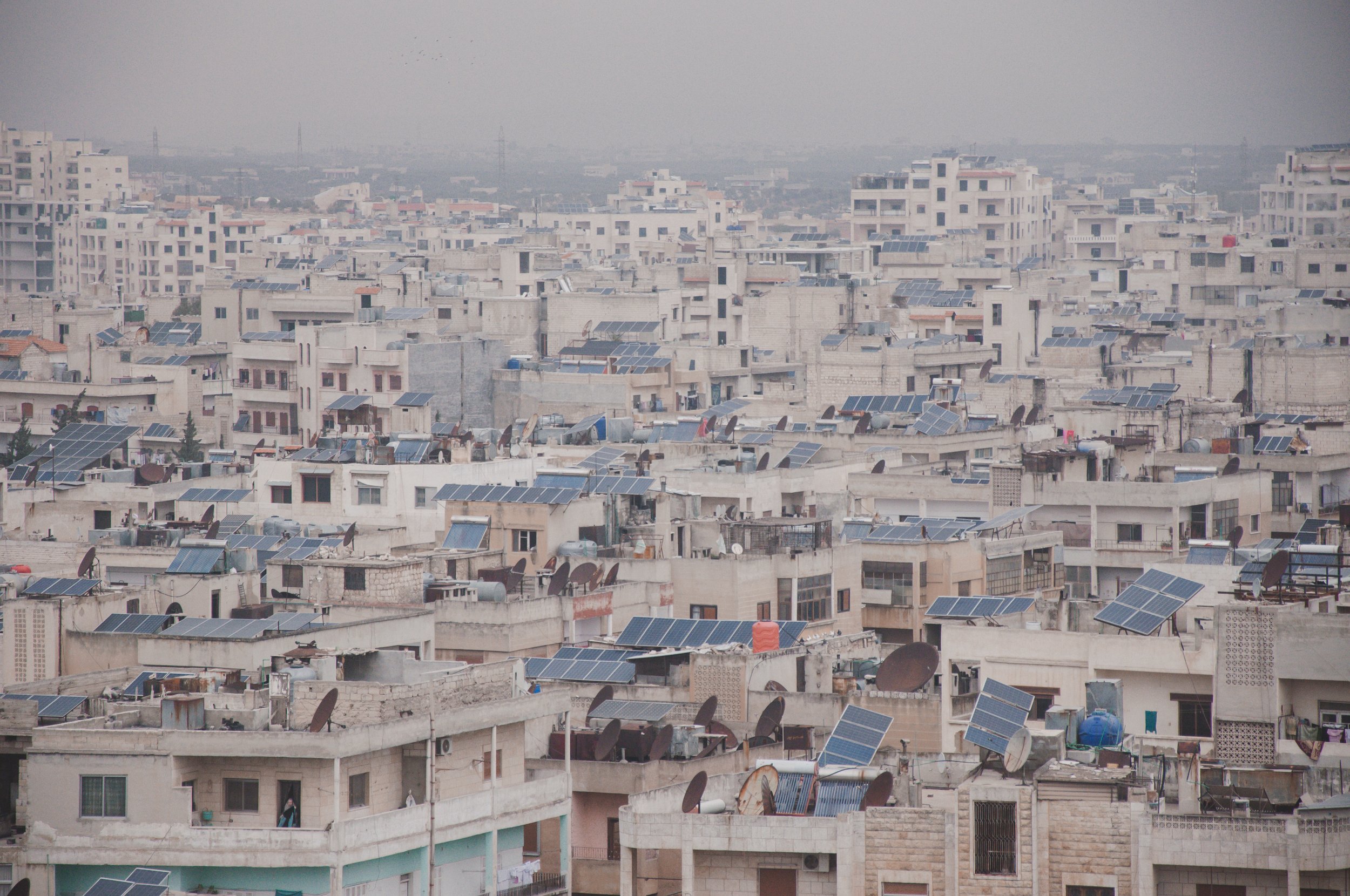
Solar installations covering the roofs of Idlib city.
Solar everywhere, but not without problems
One of the first things we noticed while visiting Syria was just how many solar panels there were. Solar has become the default response to the problems of unreliable and unaffordable power. Across Syria, and particularly in areas that were deliberately cut off from the national grid by the Assad regime, panels have appeared on rooftops at scale.
But volume has not meant quality. Subsidised loan programmes have helped more people access solar, while weak regulatory oversight has reportedly allowed counterfeit and substandard products to flood the market. A report on northeast Syria's solar value chain found evidence of suppliers deliberately mislabelling panels to exploit customers with limited technical knowledge, and the picture we heard on the ground was consistent with that. The hardware problem is compounded by a support problem. Across multiple conversations, we heard accounts of humanitarian organisations that had installed solar systems and moved on, leaving no one to call when something stopped working and no knowledge transferred to troubleshoot independently. Systems that could have delivered years of value sat unused for months, sometimes indefinitely.
Syria, in other words, does not just need more solar. It needs solar done properly. That distinction is at the core of how we approached this project.
Getting the system in place
We have been working in northwest Syria since 2023, delivering medical supplies as one of only a small number of organisations operating in the region while navigating its complex sanctions environment. Over that time, we've built trusted relationships with local partners, including SAMS, with whom we delivered this project.
Our approach here was the same as it is everywhere we work. The foundation being procurement, because substandard components create problems that cannot be monitored away, which is why we source verified, high-quality systems with a reliability horizon of over a decade, at reduced rates through our supplier partnership with Enpal. Every installation then comes with remote monitoring, a knowledge handover to the local team, and ongoing support as standard. Only a system that keeps on working also years after the installation, is what we consider a success.
The installation at Idlib University Hospital covers 559 m² of rooftop and delivers 128 kWp of solar power, configured specifically to supply the paediatric, neonatal and intensive care wards, as well as ventilation, infusion, X-ray and vaccine cooling equipment.
Getting the system in place required solving two distinct problems.
The first was logistical: importing technical equipment into Idlib under an uncertain and shifting regulatory environment is not straightforward. In practice, this meant navigating sanctions-related documentation requirements with precision, at a time when many partners weren't even aware that shipping to Syrian ports was possible again.
The second was technical: with multiple floors and different users sharing the building, the solar supply needed to be isolated at circuit level to reach only the intended departments, something that took close collaboration between our Head of Solar Engineering and the local team to work out.
The installation is now complete and the system is live.
"The most memorable experience was the joint follow-up with the field team and supplier at Idlib University Hospital when the rooftop installation was completed. Seeing the full array in place made the expected impact feel real, more reliable energy for critical hospital departments and reduced operational pressure from diesel use."
Yasser Aliwi Local Project Manager, SAMS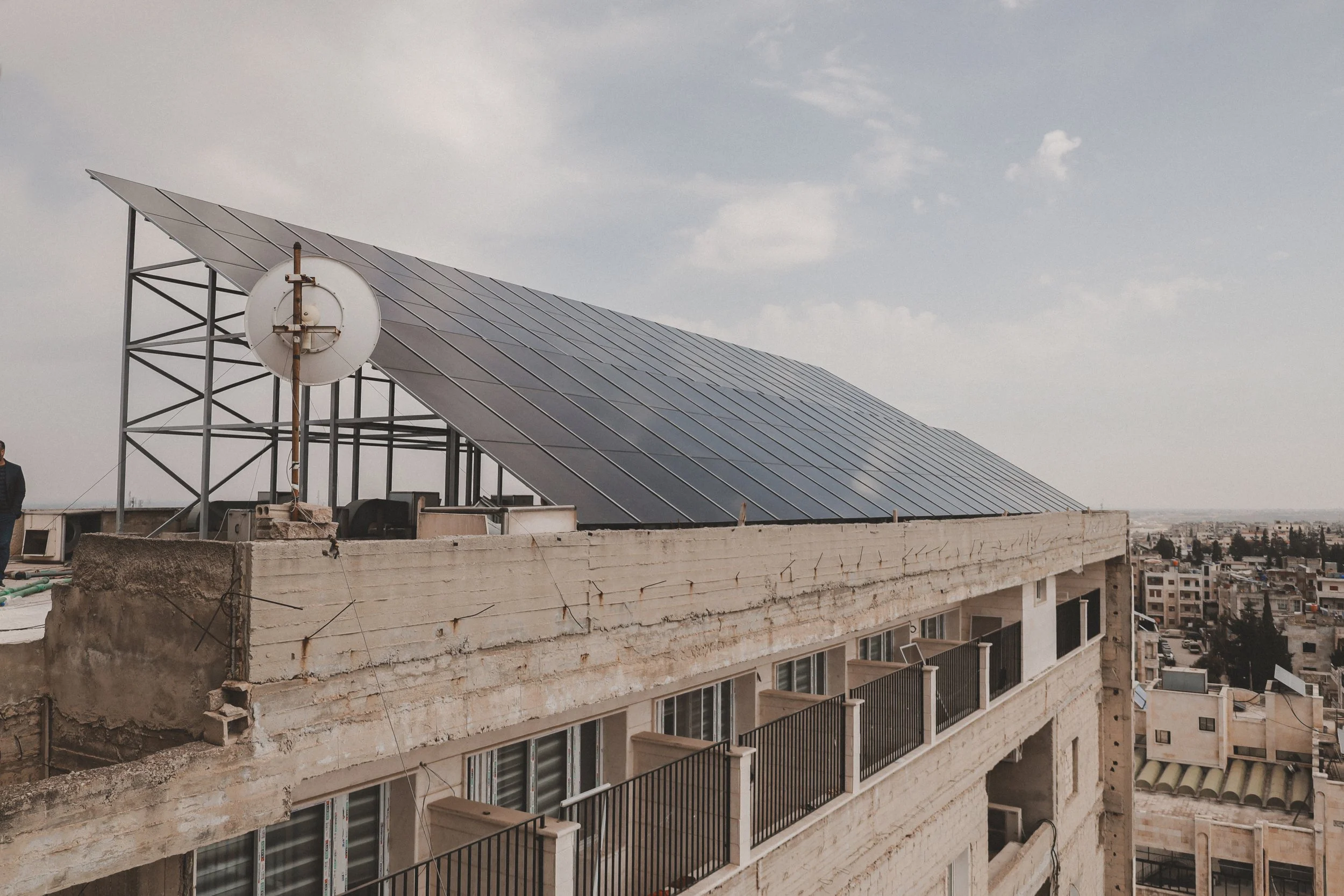
The completed installation, the equivalent of nearly three tennis courts of solar panels, now powering the hospital's most critical departments.
Making the economics work
Getting the technical side right was only part of the challenge. For a hospital operating under the financial pressures Idlib University Hospital faces, the upfront cost of a solar installation is its own barrier, and often the one that stops projects like this from happening at all. This is precisely the gap our Solar Fund is designed to close, and northwest Syria, with its combination of high solar irradiation, acute energy poverty and a healthcare system under enormous strain, made a compelling case for it.
We covered the majority of the installation upfront together with SAMS, structured as a tailored combination of grant and loan based on the hospital's financial capacity. With the help of Post Code Lotterie, we contributed roughly 40% of the total project cost as a grant, while SAMS financed the remaining 60%, repaid by the hospital in equal quarterly installments over 12 months following installation, set below the hospital's previous energy costs, meaning the installation generates net savings from day one, with no increase in monthly expenditure.
For Idlib University Hospital, that means against previous monthly diesel costs of €12,000, the hospital is now saving nearly half, resources that can be redirected towards care for close to the equivalent of 10,000 additional patients over the coming years.
What that translates to, concretely:
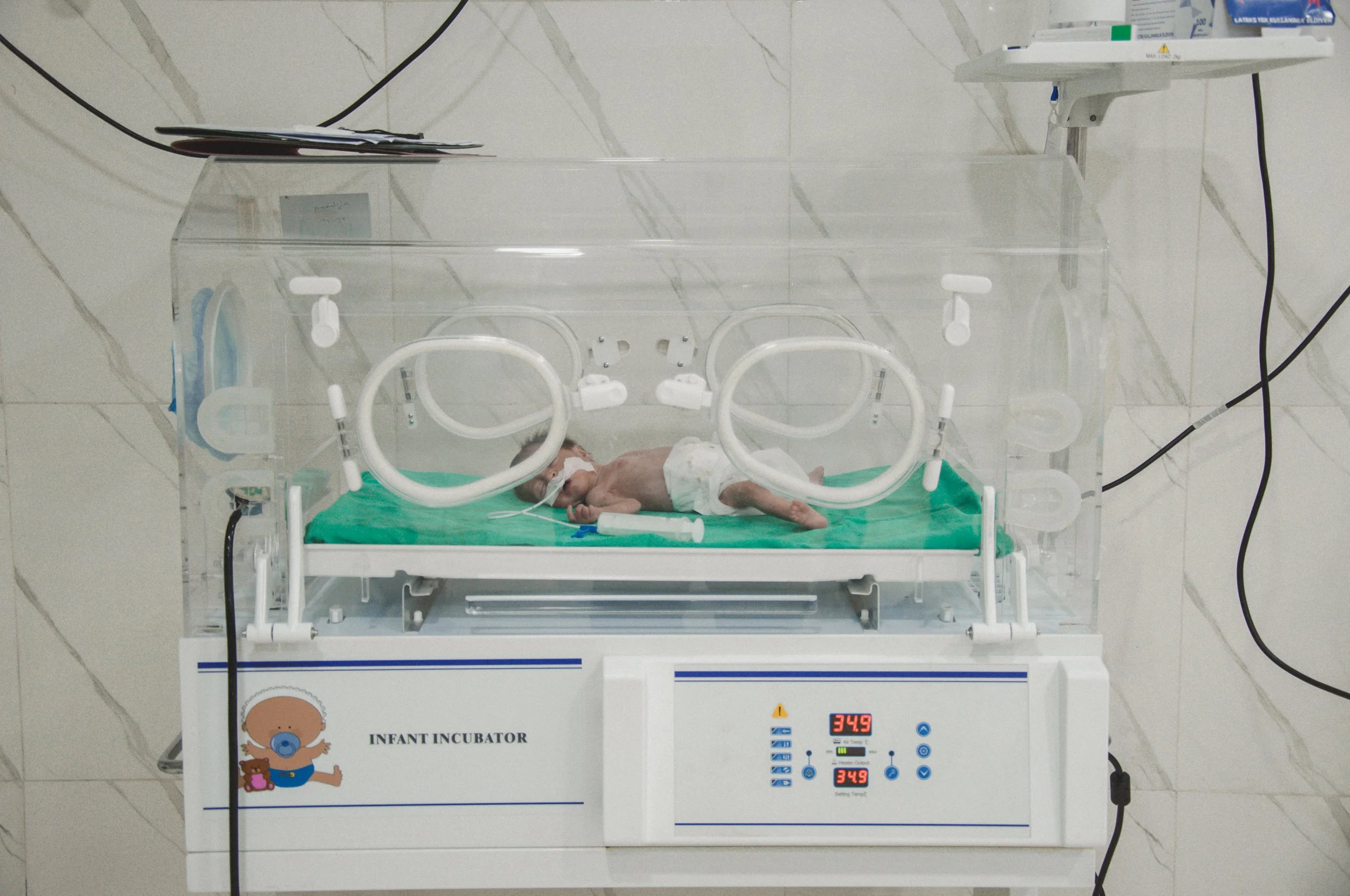
Every panel on that roof feeds into moments like this one, providing the neonatal ward with the reliable power that uninterrupted care depends on.
Partner with us
Our commitment to the country goes beyond any single project. We have been delivering medical supplies to northwest Syria since 2023 and are currently shipping another container to the region. If you are an NGO working in Syria or considering solar in a similarly challenging environment, we would love to hear from you.
Projects like this one are small steps toward something larger, the basic conditions of stability and services that make it possible for people to come home.
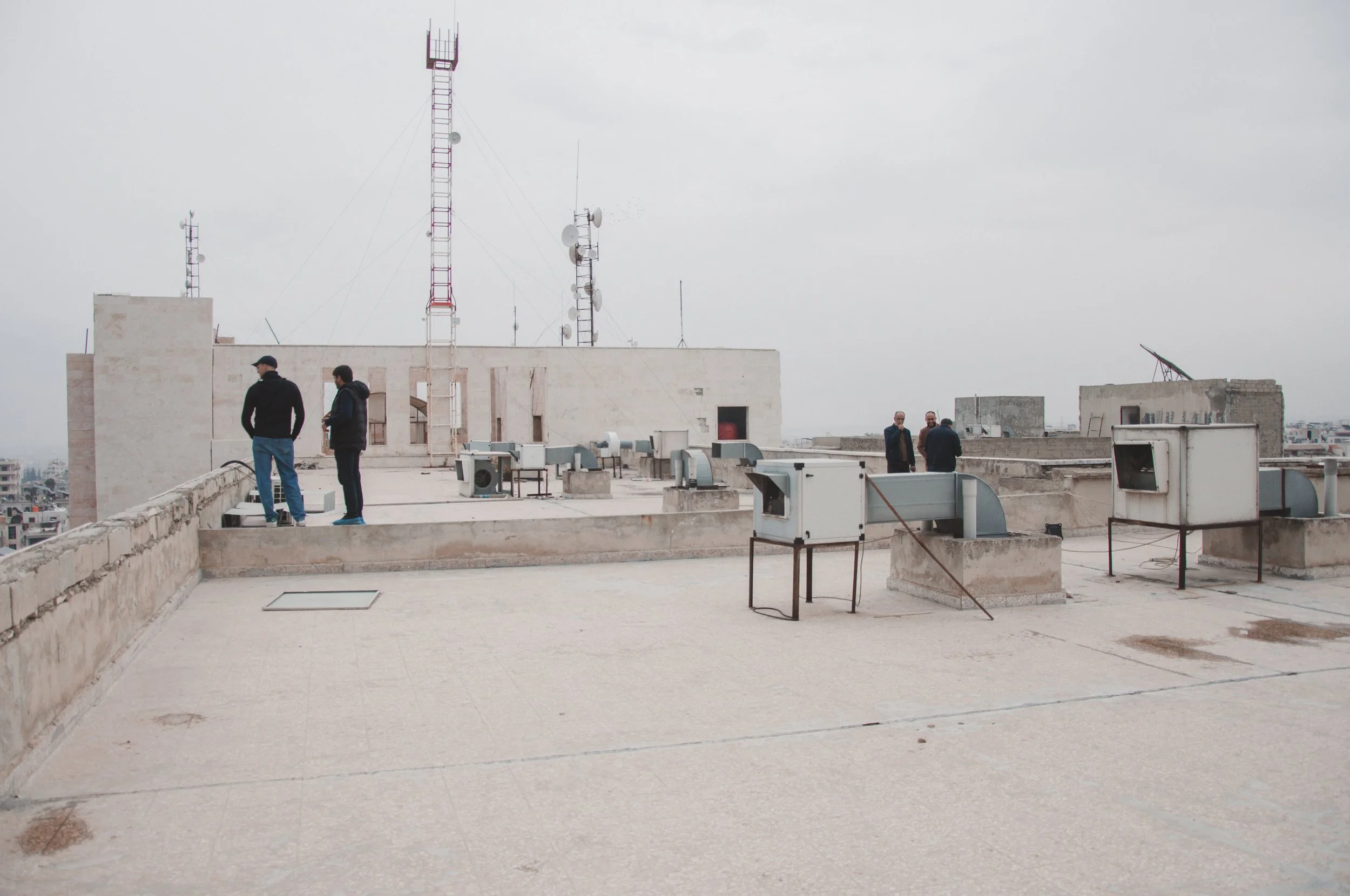
Aid Pioneers’ team on the roof of Idlib University Hospital before a single panel had gone up, a space that would look very different just a few months later.
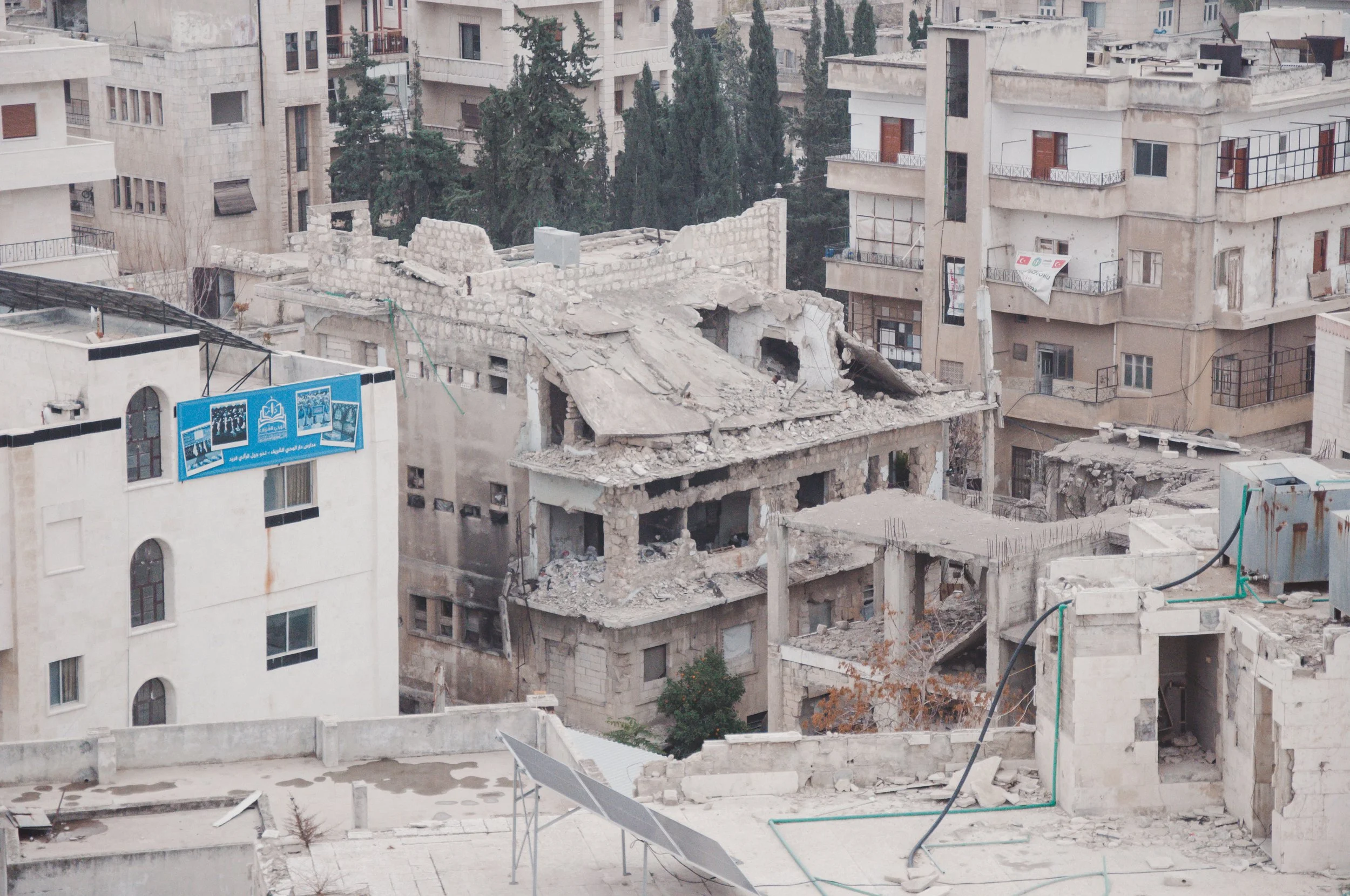
The scars of the civil war were visible in every direction from the hospital roof.
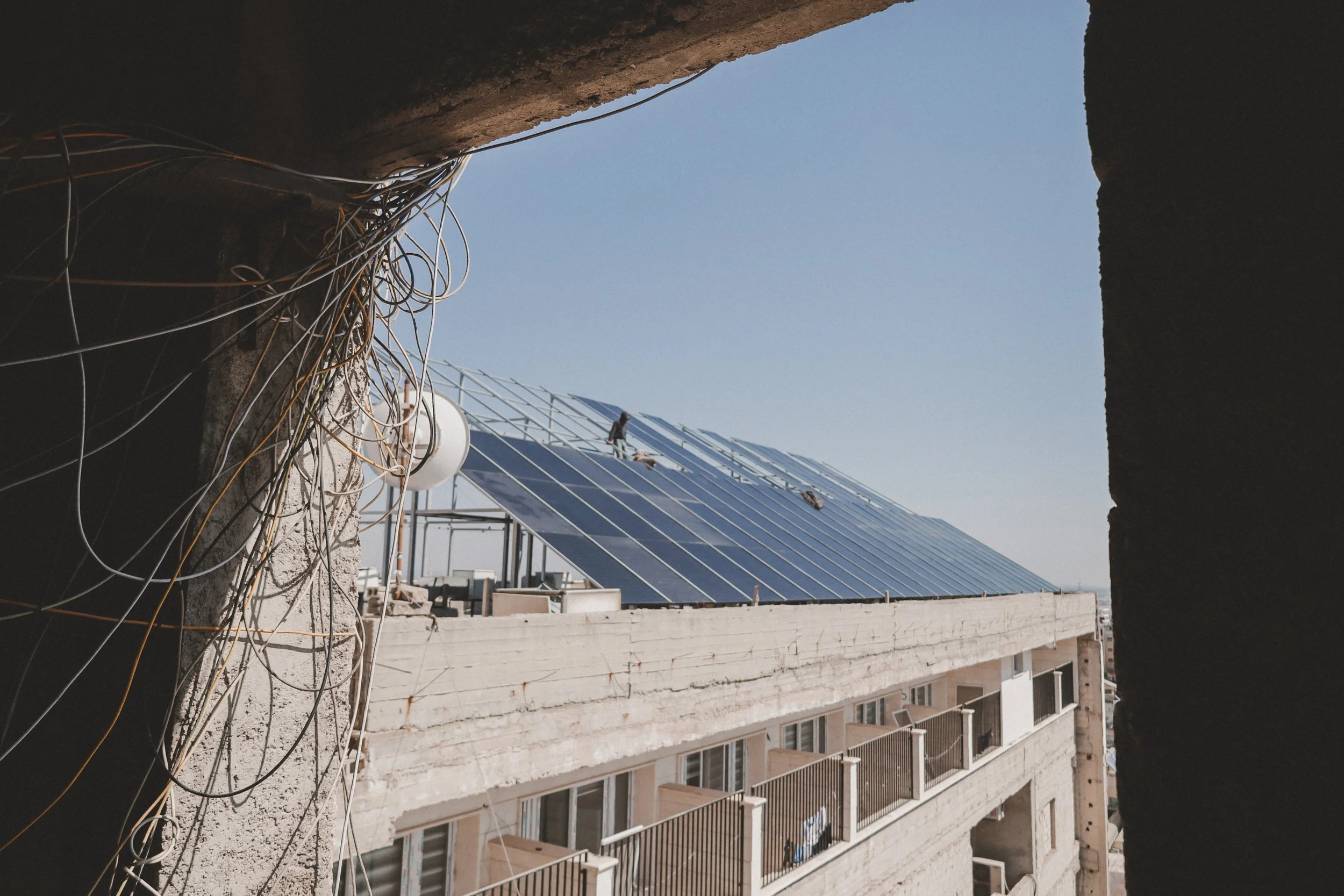
Four months later the solar installation can now be seen from the same spot.
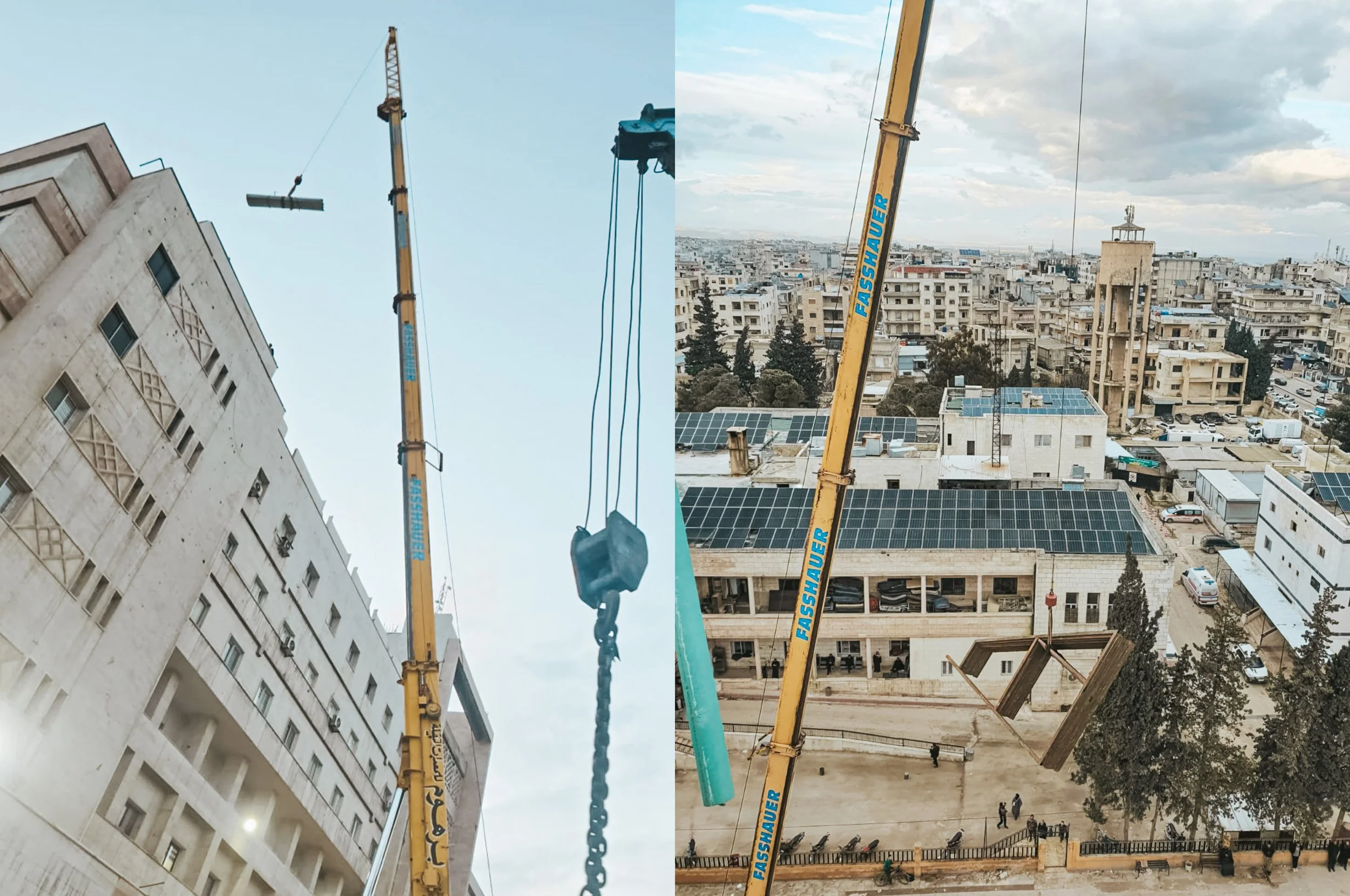
Getting the system to the roof, took on new heights.
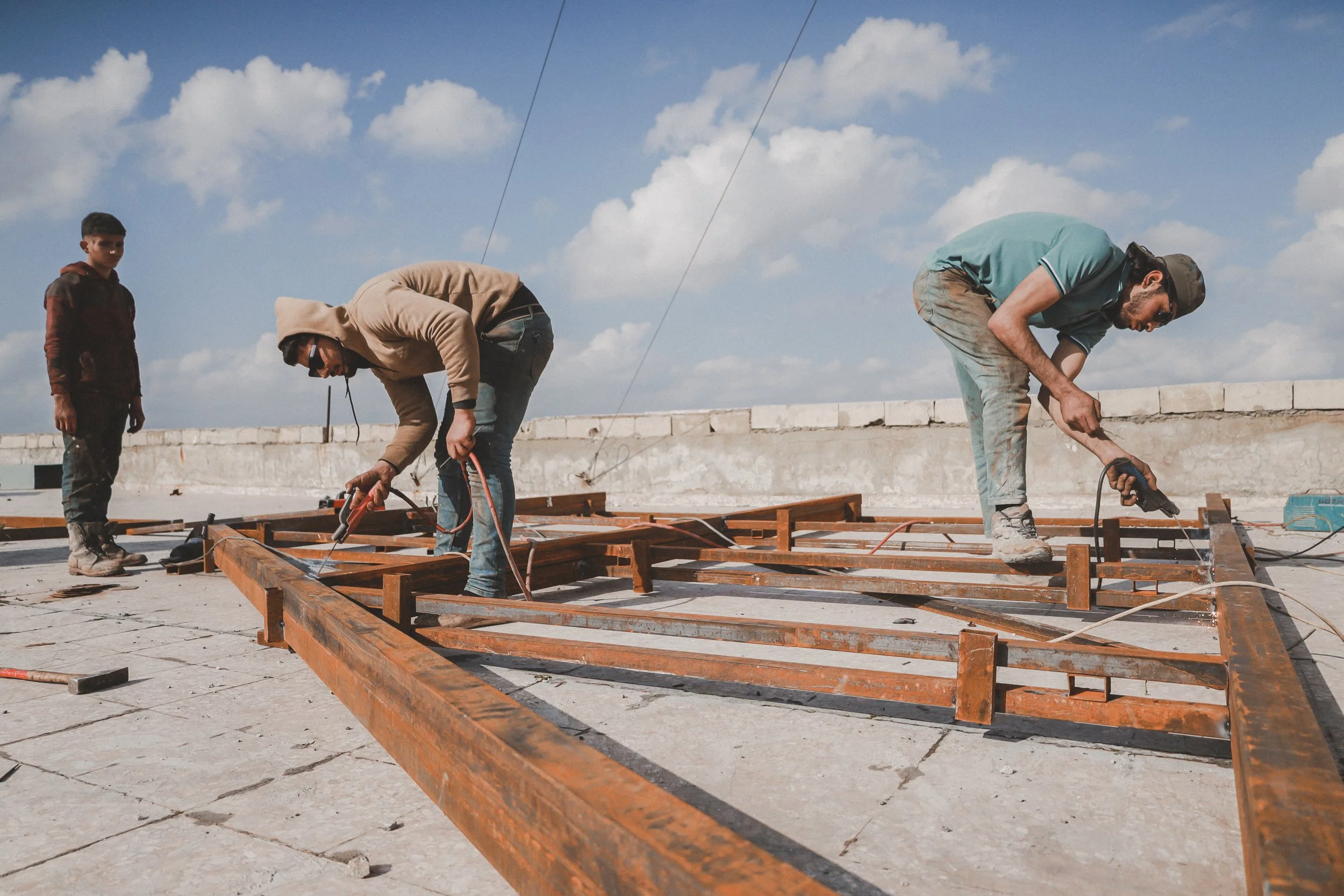
The installation team , Al Muaddel, in action.
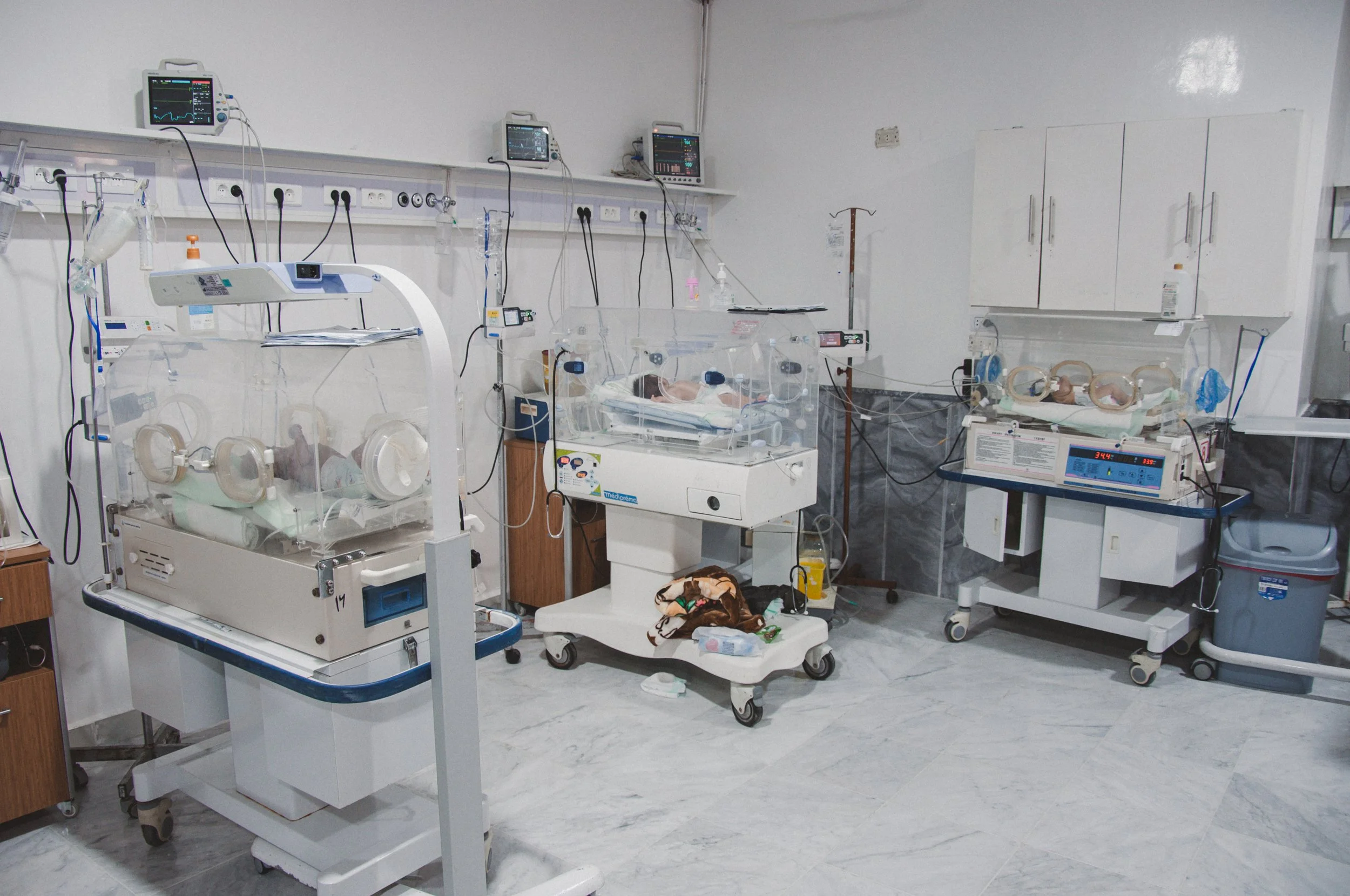
The hospital now powers the ICU unit, giving newborns a more secure start to life.
