

Medical support beyond Ukrainian frontlines
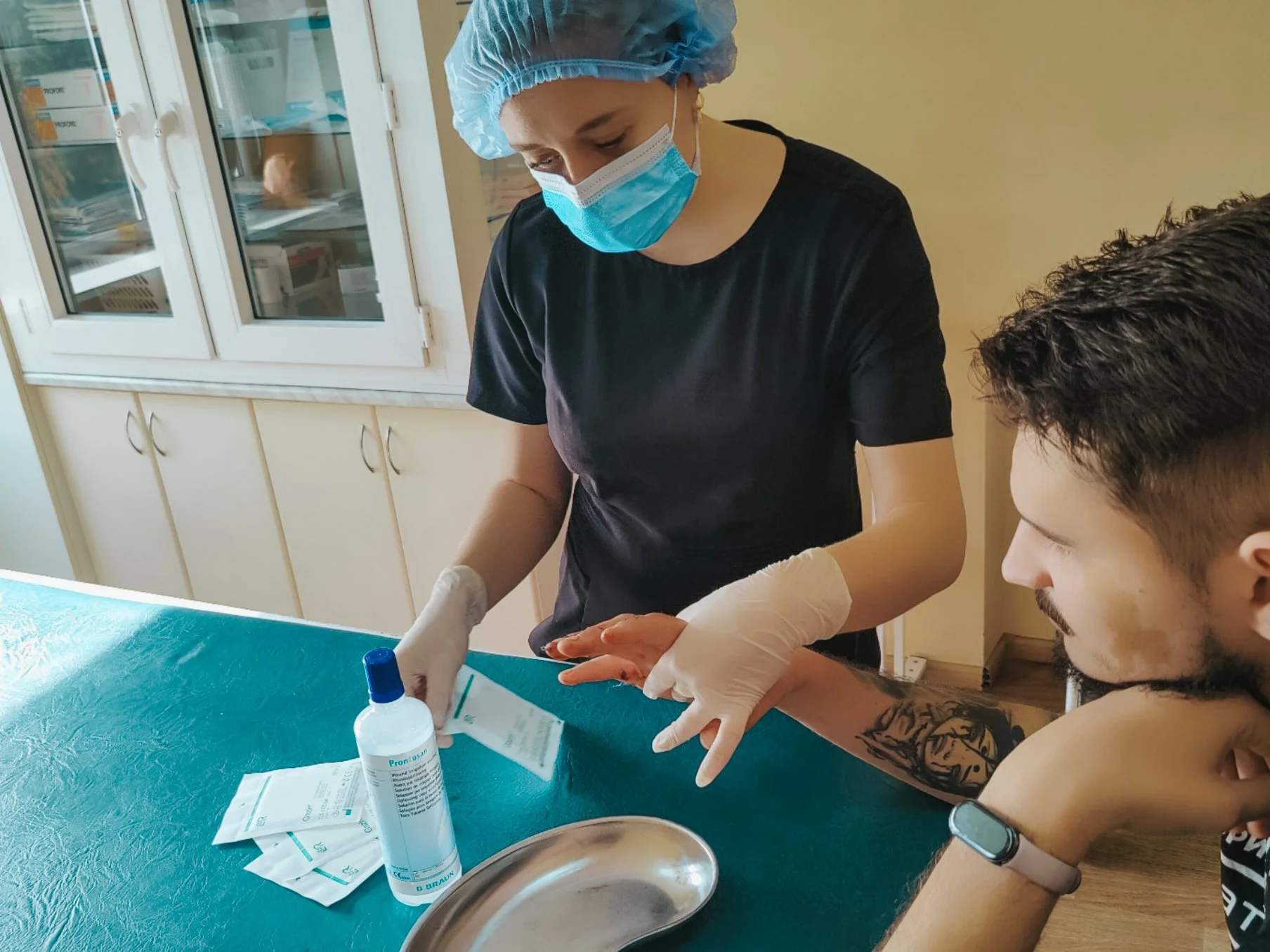
A patient receiving medical care at Ternopil Regional Clinical Hospital.
In war, hospitals treat blast injuries and shrapnel wounds, but they don’t stop treating infections, strokes, cancer, complicated pregnancies, asthma attacks and the long list of chronic conditions that doesn’t pause for geopolitics. When those systems are strained, the damage compounds slowly, from a missed diagnosis that becomes a permanent disability or an untreated infection that becomes a preventable death, and as Ukraine is approaching its fourth year of Russia’s full scale invasion, its health system is now operating under a chronic overload.
That’s why our medical support extends beyond
Ternopil sits in western Ukraine, far from the areas that dominate military reporting. For much of the war, international assistance has understandably prioritized regions closest to active fighting. Yet the pressures of war travel, through displacement, disrupted supply chains and sudden strikes that can turn any city into a state of emergency overnight.
Shortly after our team’s visit, on November 19, 2025, Ternopil was hit in an attack on civilian areas that killed 38 people, including children, sending a wave of injured people into local emergency services and hospitals. In the days that followed, the region faced the kind of surge most people tend to associate with areas closer to the front.
Not long before that attack, we had delivered a 40-foot container of medical supplies and equipment to Ternopil Regional Clinical Hospital, the largest tertiary care hospital in the region, with Flexport generously transporting and covering the logistics free of charge. The shipment wasn’t originally planned as an emergency response, but it underlined that war is both a frontline reality and a national one.
Hospitals like Ternopil’s carry a double burden. They treat local residents, and they absorb pressure from displaced citizens, which is estimated to be 3.78 million people inside Ukraine since the war began. When the unexpected happens, these hospitals become the difference between a system that bends and a system that breaks.
Supporting places like Ternopil is, in a very practical sense, a way of refusing the idea that only certain regions “count” at any given moment. War does not respect that hierarchy, and neither should aid.
A continuous stream of support
Since 2022, we have delivered 37 shipments of donated medical supplies from Project C.U.R.E., MedWish, Mission Outreach and MAP International, with a total value of USD $14,343,561. In close collaboration with our local Ukrainian partners, these goods have been distributed to more than 400 healthcare institutions, strategically selected based on need and system pressure, helping to enable an estimated 66,000+ additional ICU days.
Flexport have been our consistent logistics partners across these shipments, keeping the pipeline moving in conditions where “moving” is rarely straightforward. Through this network of donors and private sector partners, we’ve been able to deliver support with a multiplied value of roughly 20:1, meaning that for every €1 spent, around €20 worth of medical supplies has reached Ukraine’s health system.
We are determined to continue this support and already have 12 additional medical shipments on the way or planned in the coming months.
Join us in sustaining this work! With your help, we can keep shipments moving and help Ukraine’s health system endure the months ahead.
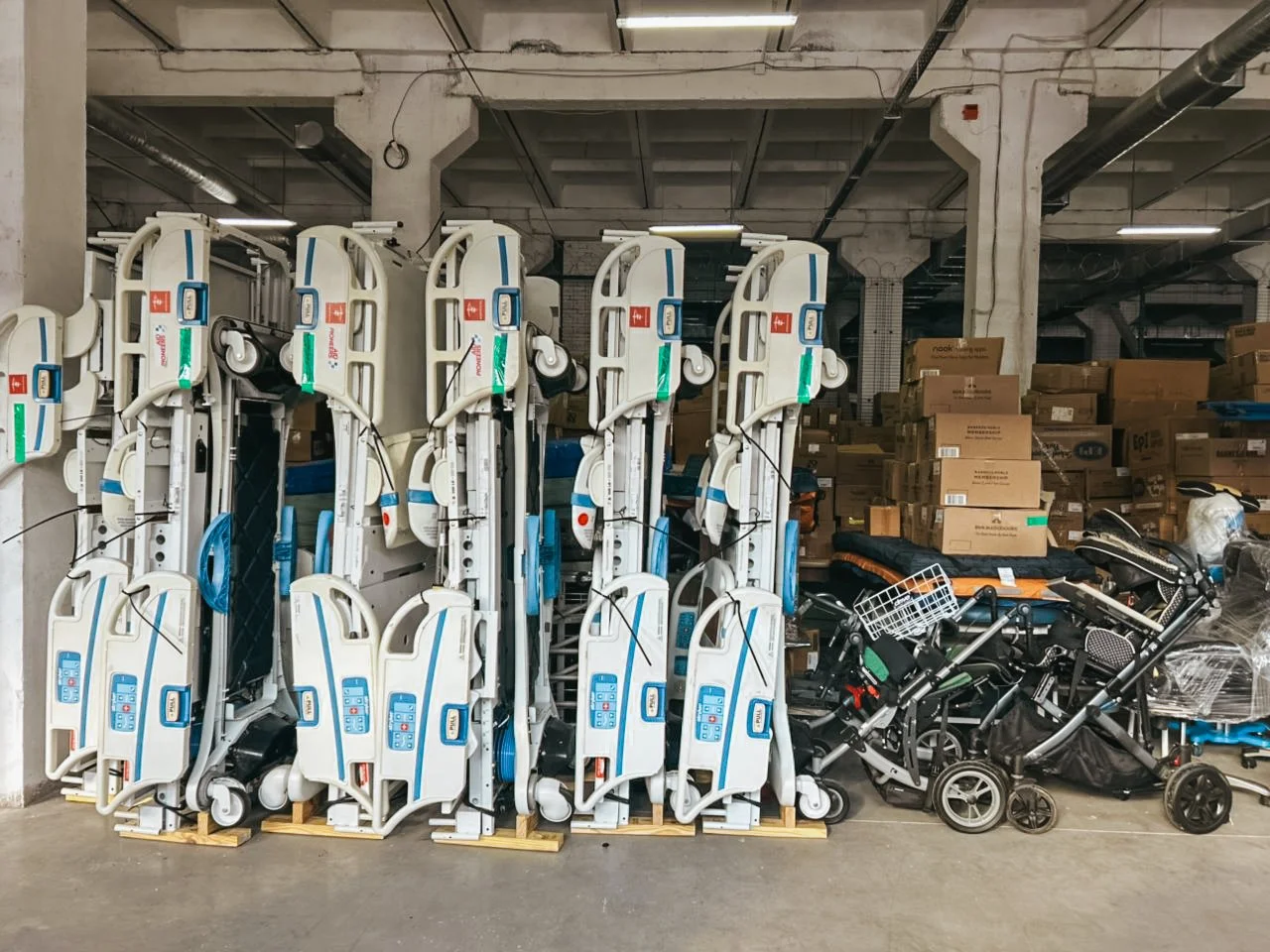
ICU beds in transit for a health facility in Mykolaiv.
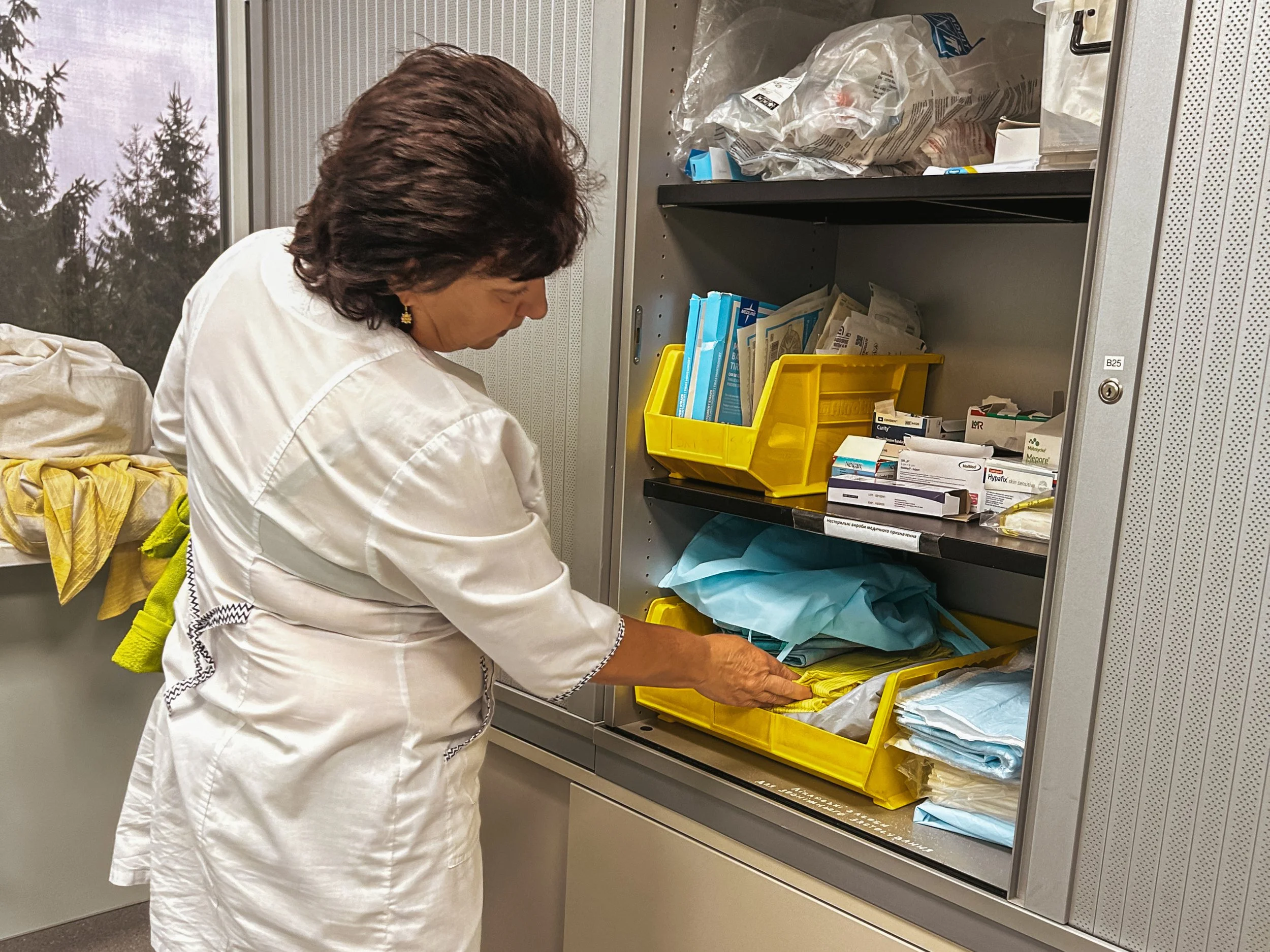
Staff at the municipal hospital in Zviahel organizing newly arrived medical supplies.
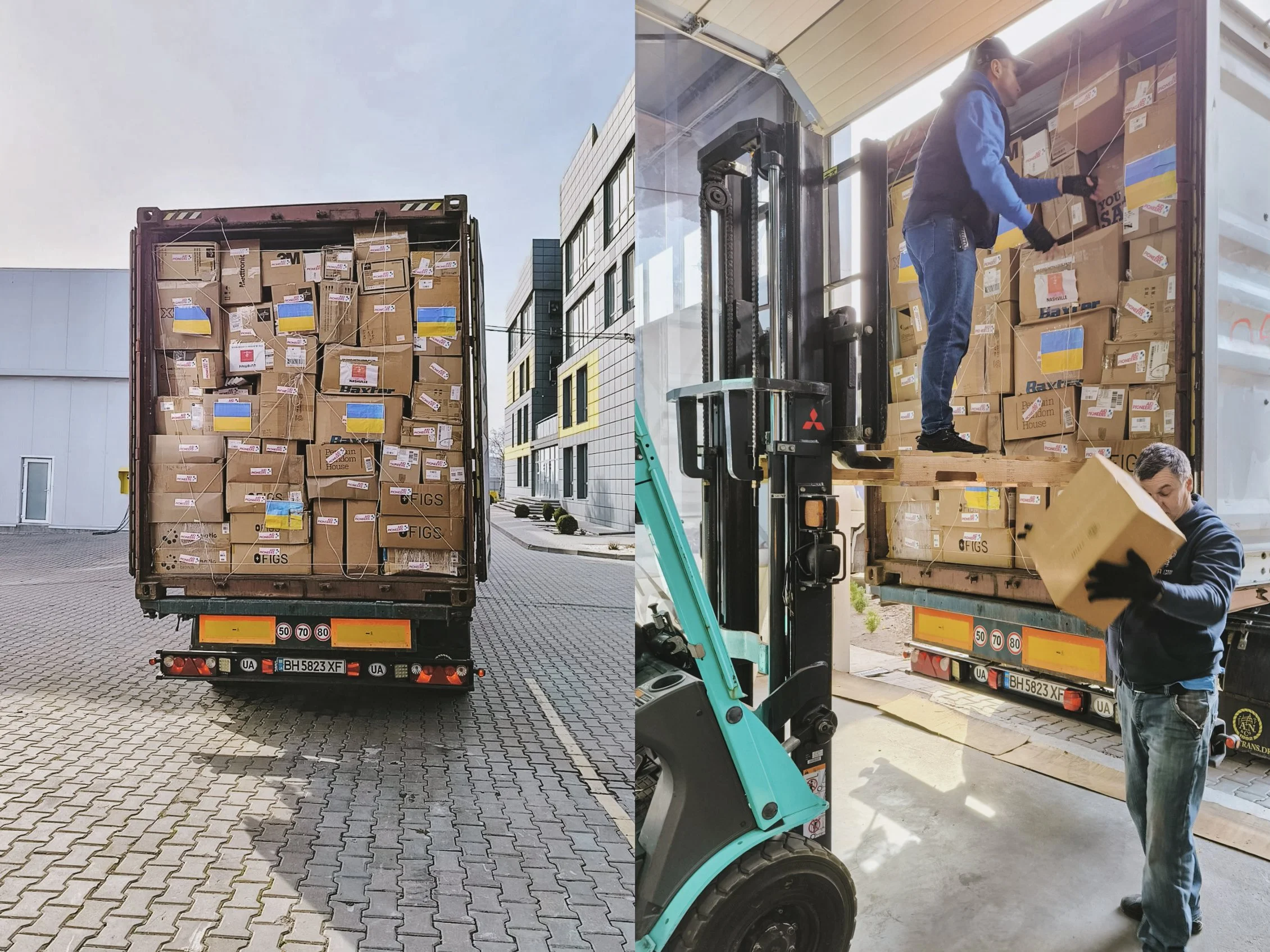
A shipment of essential medical supplies, ranging from surgical equipment and gowns to wheelchairs and catheters, arrives in Poltava, Ukraine.

Our team visiting one of the many Ukrainian warehouses through which medical supplies are distributed.
