

Pibor County Hospital in South Sudan serves 43,000 people with just 32 beds, and mothers in the maternity ward were often left to recover on cardboard or bare frames. Through a partnership between Aid Pioneers, Project C.U.R.E, and ForAfrika, six facilities including Pibor County Hospital, received close to $349,000 worth of medical equipment, consisting of items such as beds, mattresses, surgical kits and monitors. Mothers like Topista now have somewhere solid to rest after childbirth, and hospital staff say the change may encourage more women to give birth at the facility rather than at home.

Lillian Achirocan, a ForAfrika midwife, was among those who helped unpack and set up the new equipment.
Pibor County Hospital serves roughly 43,000 people across the Greater Pibor Administrative Area in South Sudan. Yet the hospital has only 32 beds. Of those, eight sit in the maternity ward and four in the short-stay stabilization unit. When the ward filled beyond its capacity, as it often did, staff improvised by using cartons and mats, that were laid across empty bed frames so patients had something, however thin.
Topista, who gave birth to her second daughter at the hospital, remembers that well:
“Previously, when I gave birth here to my second daughter, we slept on sleeves of shredded boxes. It was very uncomfortable for both me and my baby.”
Across the maternity and children's ward, the hospital receives around 25 patients a week, and the shortage of mattresses had become, in the words of hospital staff, a source of quiet embarrassment whenever visitors came through.
The gap is a reflection a wider strain on South Sudan's health system, one still recovering from more than two decades of war. Maternal and child mortality rates remain among the highest in the world, and in Greater Pibor specifically, malaria accounts for over a third of diagnoses at local facilities. Vaccine coverage sits near 50 percent, which leaves children exposed to outbreaks, including a recent measles episode in Mewun Payam. In a setting like this, a hospital bed stops being ordinary furniture and an essential tool throughout recovery.

Topista in the maternity ward with her newborn.
Closing the gap
Aid Pioneers supported a shipment of medical equipment to Pibor County Hospital, made possible through Project C.U.R.E and our local partner ForAfrika, who has worked in the region for years and understands both the needs of the hospital and the logistics of getting supplies there. Together, the partnership delivered close to $349,000 worth of equipment including crutches, wheelchairs, surgical kits, theatre beds, mobile trolleys, oxygen concentrators, mattresses and a broad range of hospital consumables.
The equipment was distributed across several of Pibor County Hospital’s departments such as the maternity ward, operating theatre and emergency care unit, while part of the shipment also were to be distributed to five other clinics, including Boma County Hospital in Jebel Boma.
The people behind the numbers
Dr. Patrick Ohiri, a ForAfrika doctor who performs surgeries at Pibor Civil Hospital, described that admitting patients to beds without mattresses had felt disheartening, and the new supplies meant patients finally had a comfortable place to recover. Dr. Shamir Joseph, the County Hospital Director, put it in similarly direct terms: the hospital had been in desperate need of additional equipment and consumables, and the donation arrived at the right moment. A dedicated team of health workers, he added, would make real use of it.
For Topista, the change was personal. The new beds, she said, would encourage more mothers to come to the facility to give birth rather than deliver at home without medical support. That single sentence carries most of what this project was meant to achieve. A hospital cannot offer dignity to patients it cannot persuade to walk through its doors, and something as basic as a mattress can be the difference between a mother choosing to come in or choosing to stay away, risking unsafe birthing conditions.
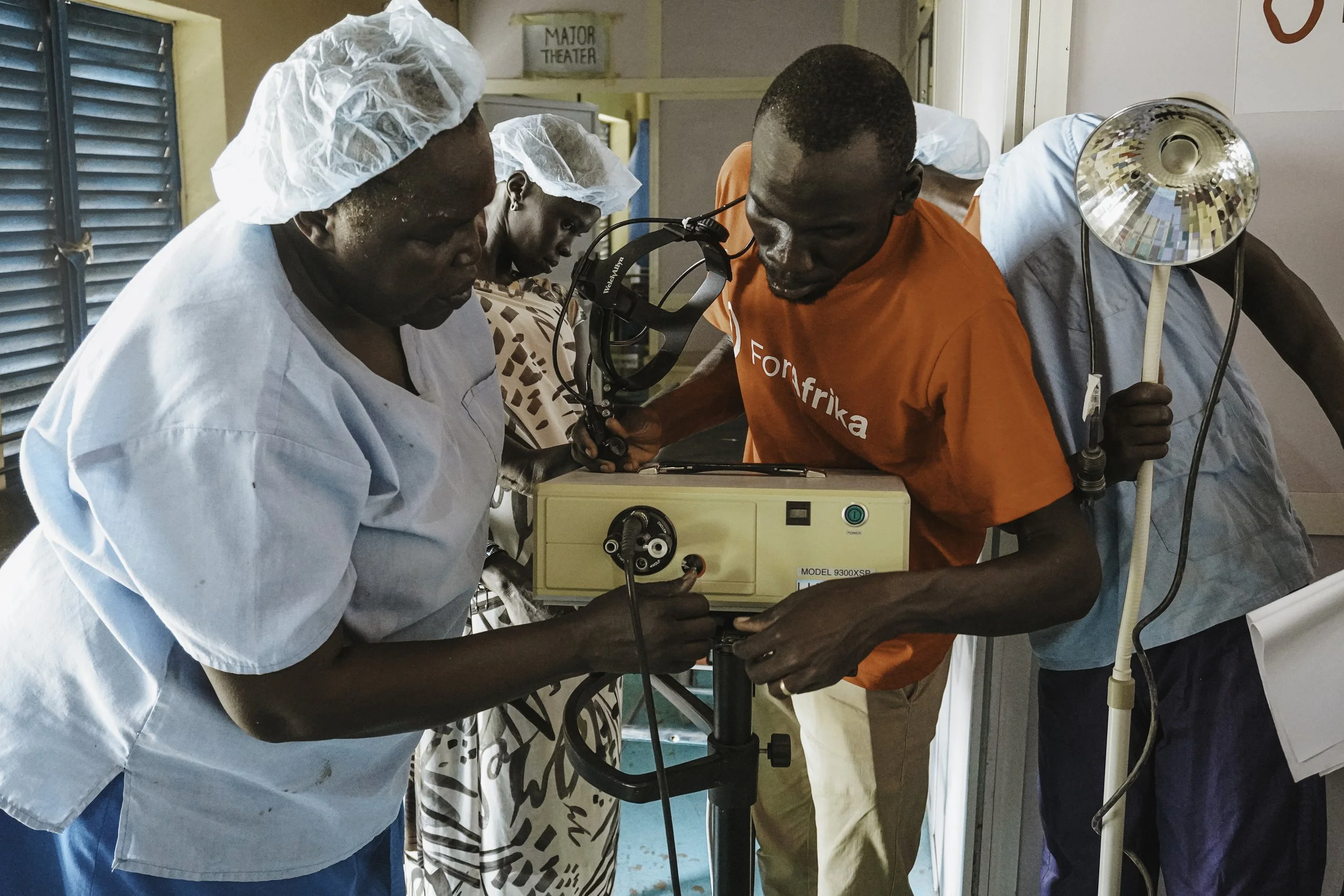
Lillian Achirocan and the ForAfrika team, setting up the equipment after arrival.
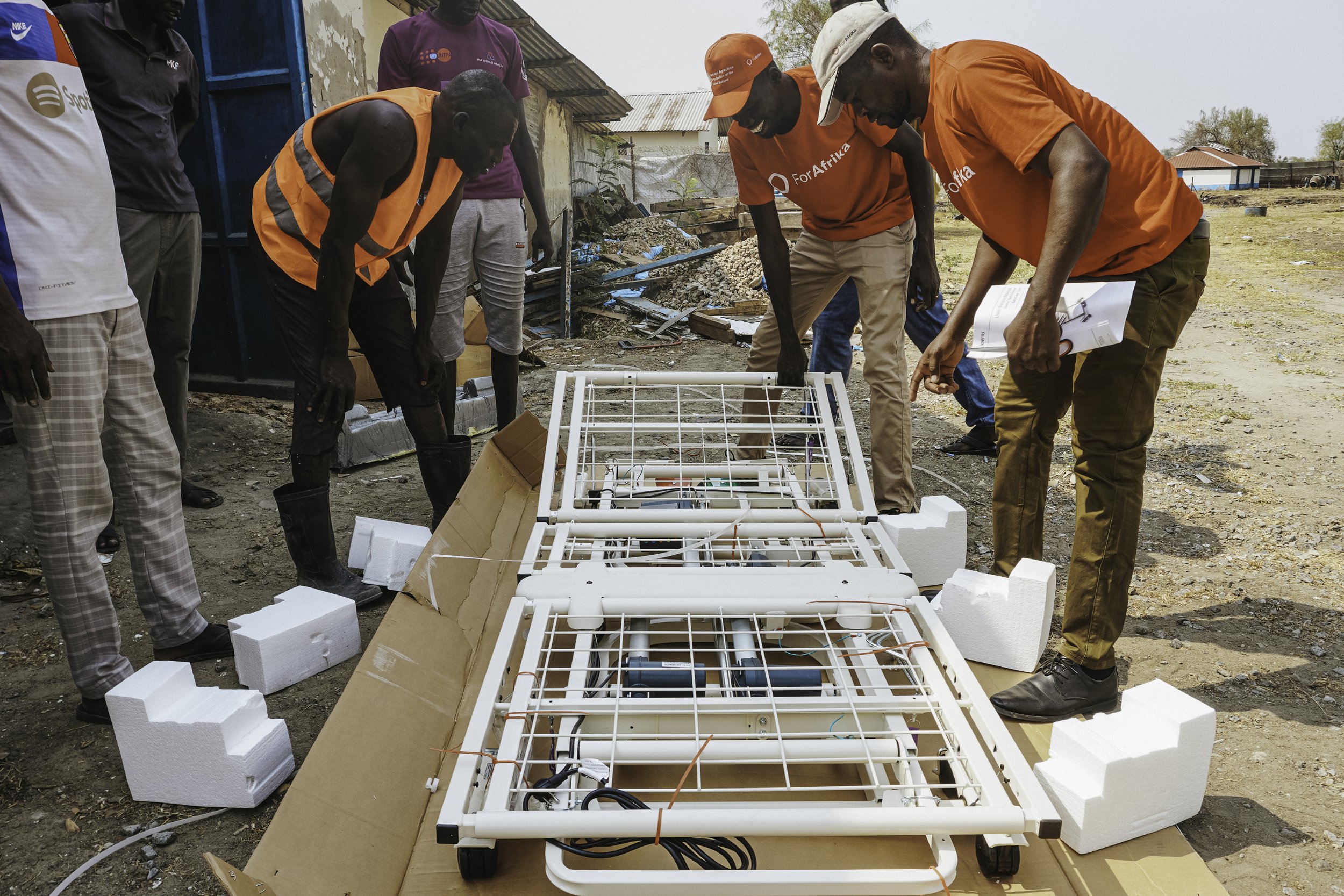
Unpacking of hospital beds at Pibor County Hospital.
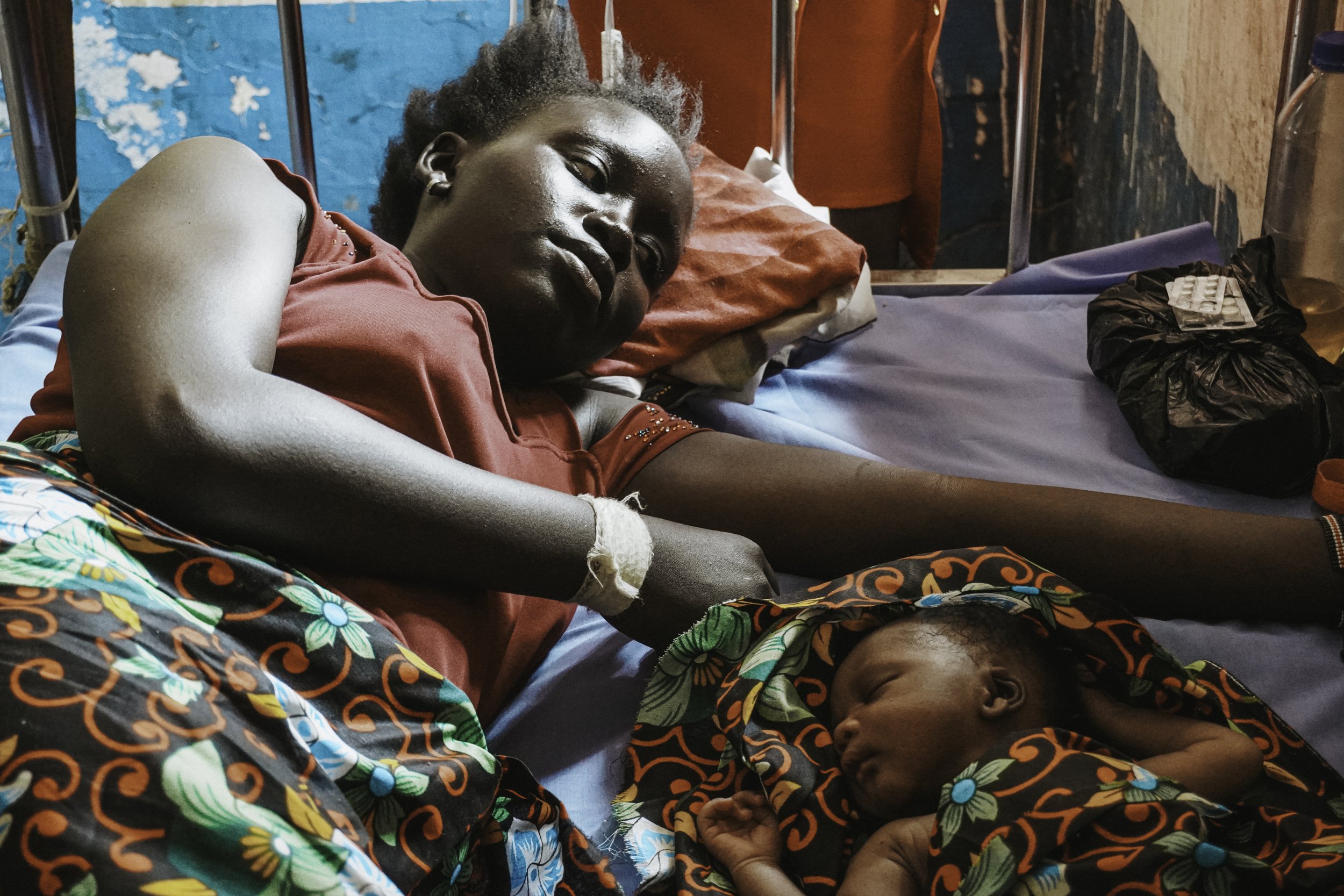
A new mother in the maternity ward, making use of the mattress provided from the shipment.
