Solar power for Syria's critical wards
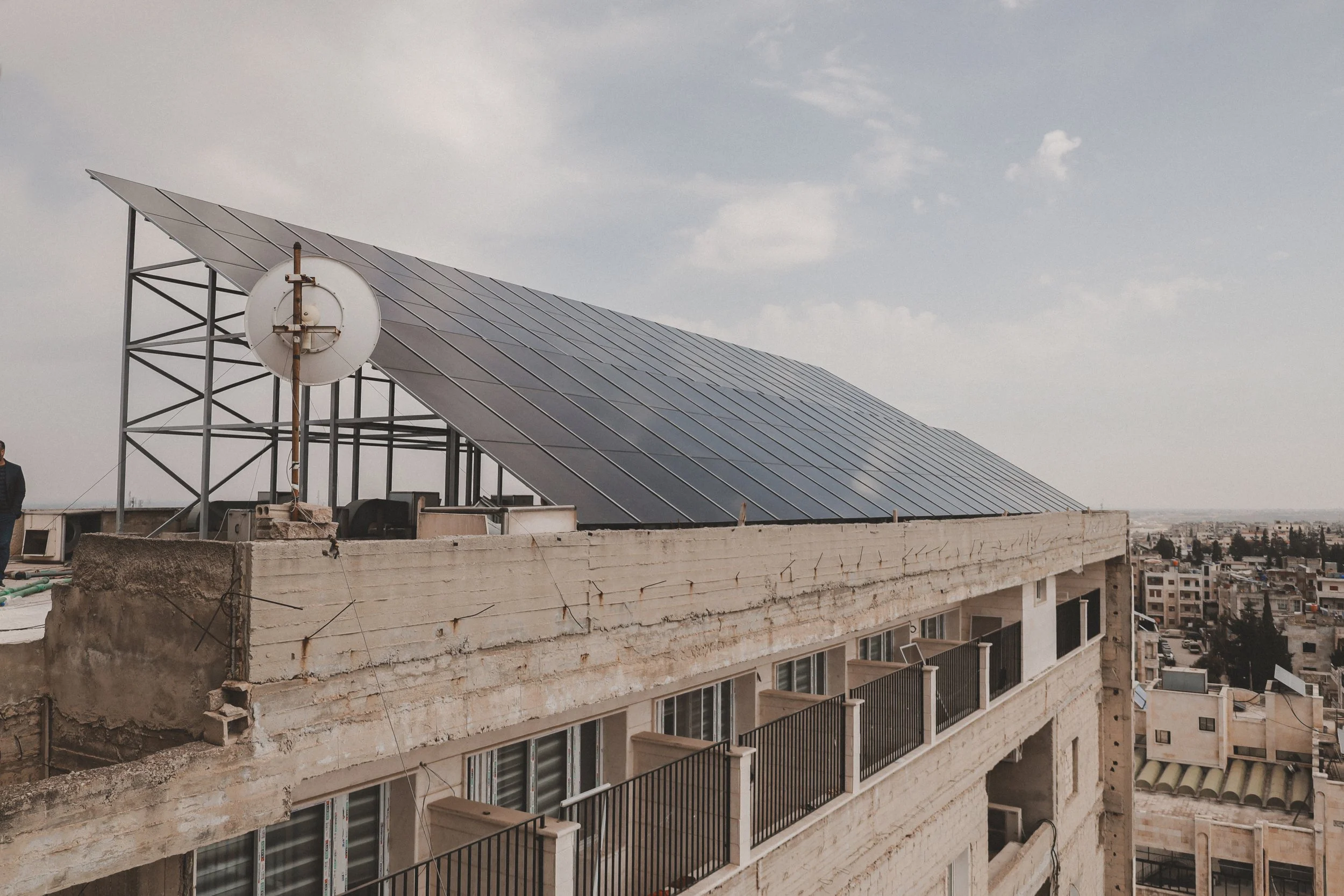
128 kWp of solar installed across Idlib University Hospital's most critical departments, including Syria's largest neonatal ICU, cutting energy costs nearly in half from day one.
Solar Track Record
THE CHALLENGE
A hospital under pressure, running on diesel
At midday on 2 December 2024, missiles struck Idlib University Hospital, tearing through its neonatal ICU — Syria's largest. A year later the ward was running again, but on diesel: roughly €12,000 every month to keep incubators, ventilators and vaccine fridges alive. For a hospital serving nearly 2.9 million people, an unreliable and unaffordable power supply is a direct risk to patients' lives.
THE CHALLENGE
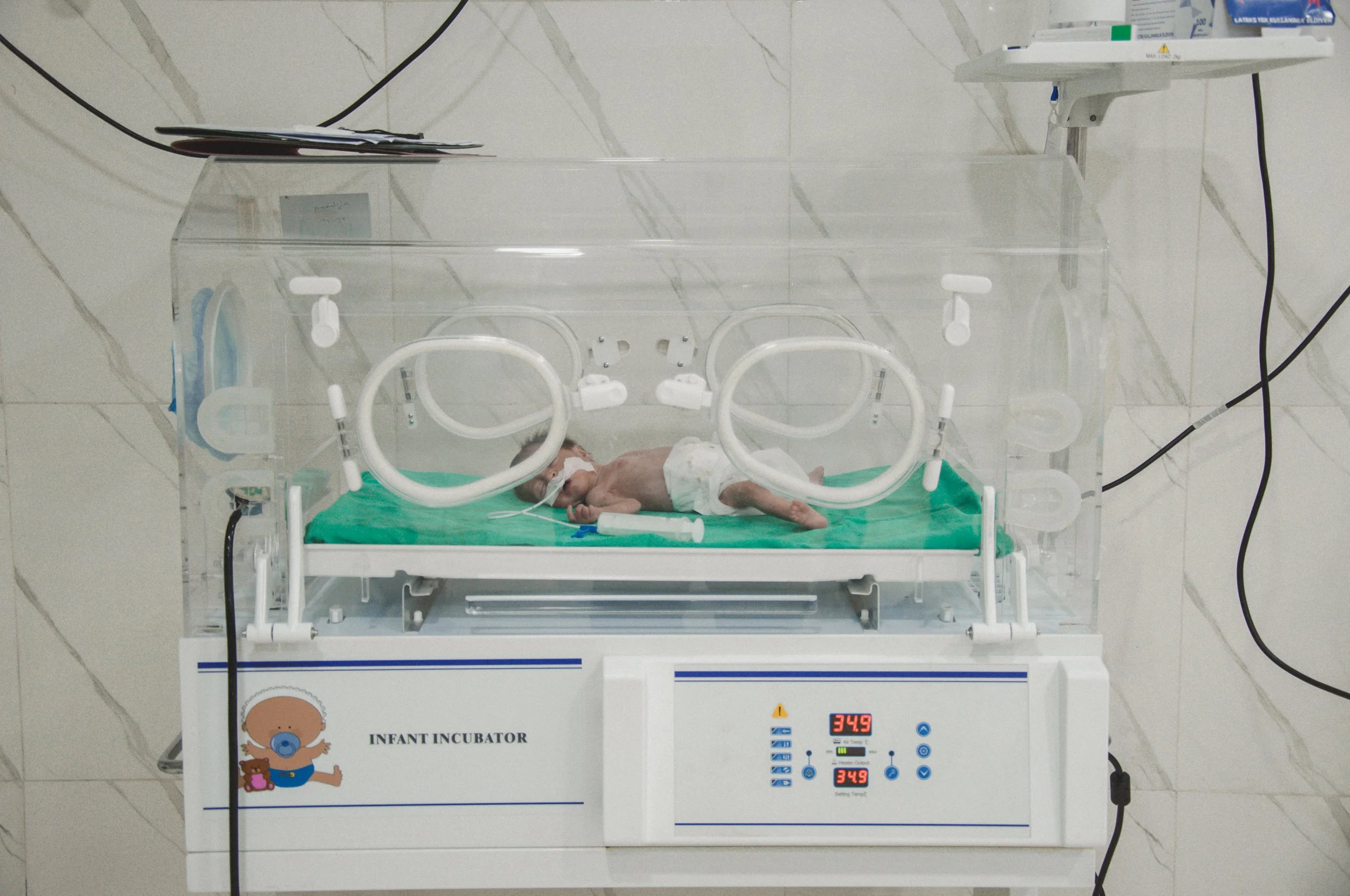
For the smallest patients, power is the difference between life and death
Idlib University Hospital runs the largest neonatal intensive care unit in Syria. Its incubators, ventilators and monitors keep the region's most fragile babies alive — and every one of them depends on a current that never stops. Before the array went up, a brief, unexpected outage could shut down the very machines these newborns cannot breathe without.
Now, when the grid falters and the diesel runs low, the panels on the roof hold the line — quietly, around the clock — between a machine that stays on and one that doesn't.
Our role · Implementation partner
Aid Pioneers ran the project end to end — system design, procurement, international logistics, on-site installation support and long-term monitoring. Everything the hospital's team shouldn't have to solve alone.
PROJECT TIMELINE
IN PARTNERSHIP WITH