The ripple effect of community-led education
More than 5.7 million refugee children are currently out of school globally, and Uganda alone records somewhere between 4.5 and 7 million children who have dropped out or are at risk of doing so. Planning for Tomorrow (P4T) has been working inside Kyangwali Refugee Settlement for nearly two decades, building schools where refugees lead their own educational response. Aid Pioneers first connected with P4T through Altenburg Foundation, who were early supporters of both organisations, and we have since partnered with them to bring clean energy to their schools and serve more students. Students like Samuel Usabuwera, who moved from P4T learner to school founder before turning 20.
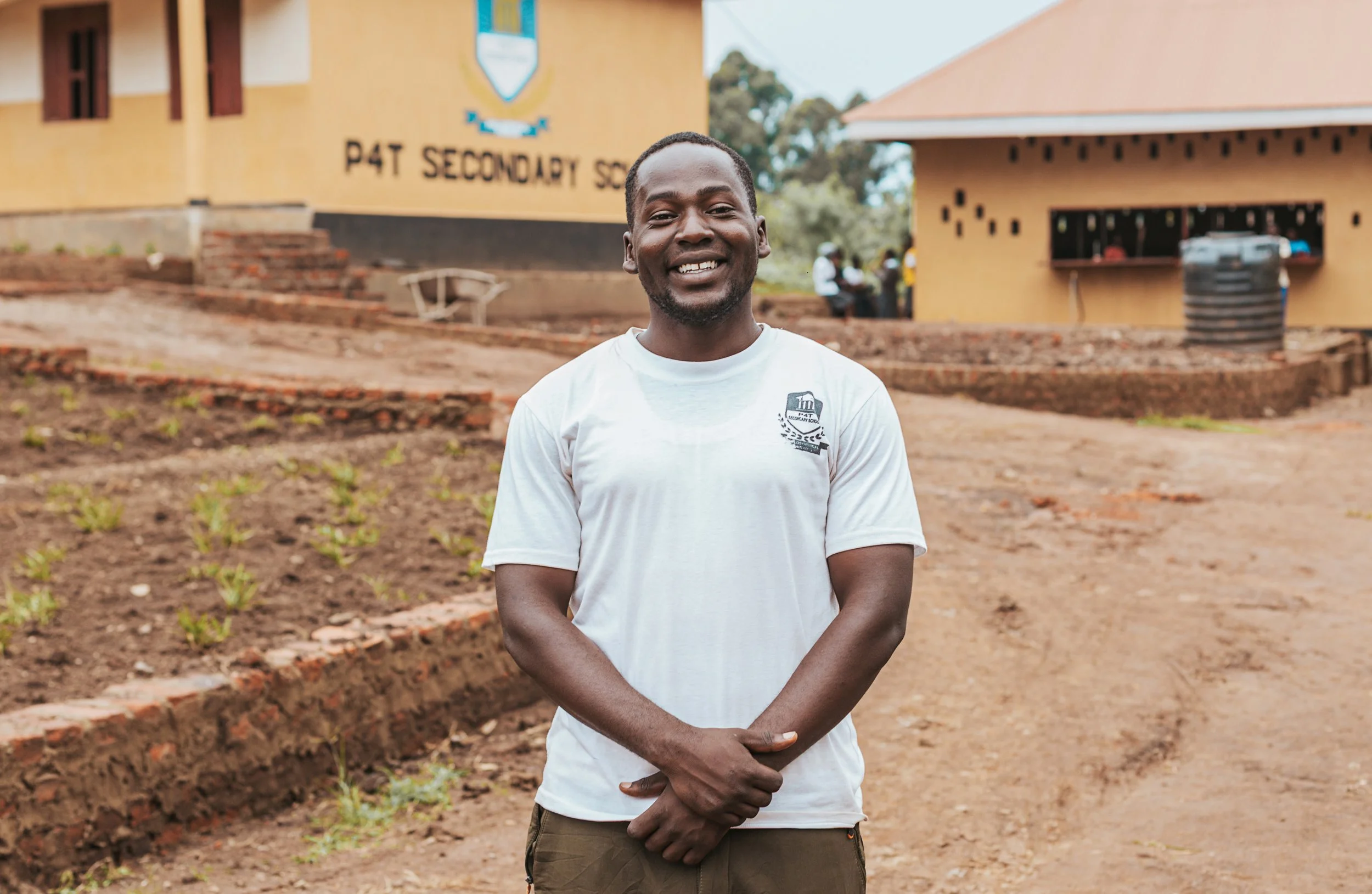
Samuel Usabuwera during our visit at the Secondary School, shortly before his graduation.
A school built from within
When Samuel Usabuwera first heard about Planning for Tomorrow (P4T), he thought he was going to be taught by white foreigners.
His father had come back from the market with news of a school near the network mast in Kyangwali Refugee Settlement. It had been started, he said, by muzungus. For Samuel, who was still in Primary 3, that alone was enough to spark his interest.
“I was like, wow. When I got there, there were no muzungus.” Samuel remembers.
His father had chosen the word deliberately. In Kyangwali, as in many places shaped by poverty and displacement, good education was often imagined as something that existed elsewhere: in bigger cities like Kampala or in classrooms taught by foreigners.
However, what he found instead was a school founded and led by refugees themselves.
Kyangwali refugee settlement sits in western Uganda, close to the border with the Democratic Republic of Congo. It opened in the 1960s and has since grown into one of the region's largest settlements, hosting over 157,000 people in 2026, after successive waves of displacement from nearby countries.
Within the settlement, P4T runs primary and secondary schools. The organisation was founded in 2007 by refugees inside Kyangwali. Its founders arrived between 1996 and 2001 after fleeing conflict in the DRC, South Sudan and neighbouring countries. Since then, P4T has grown into a wider community organisation working across education, health, livelihoods and protection. Guided by the simple principle: “Nothing for us without us.”
For Samuel, that principle would become more than an organisational motto. It would shape how he understood education, leadership and what someone from his own community is capable of.
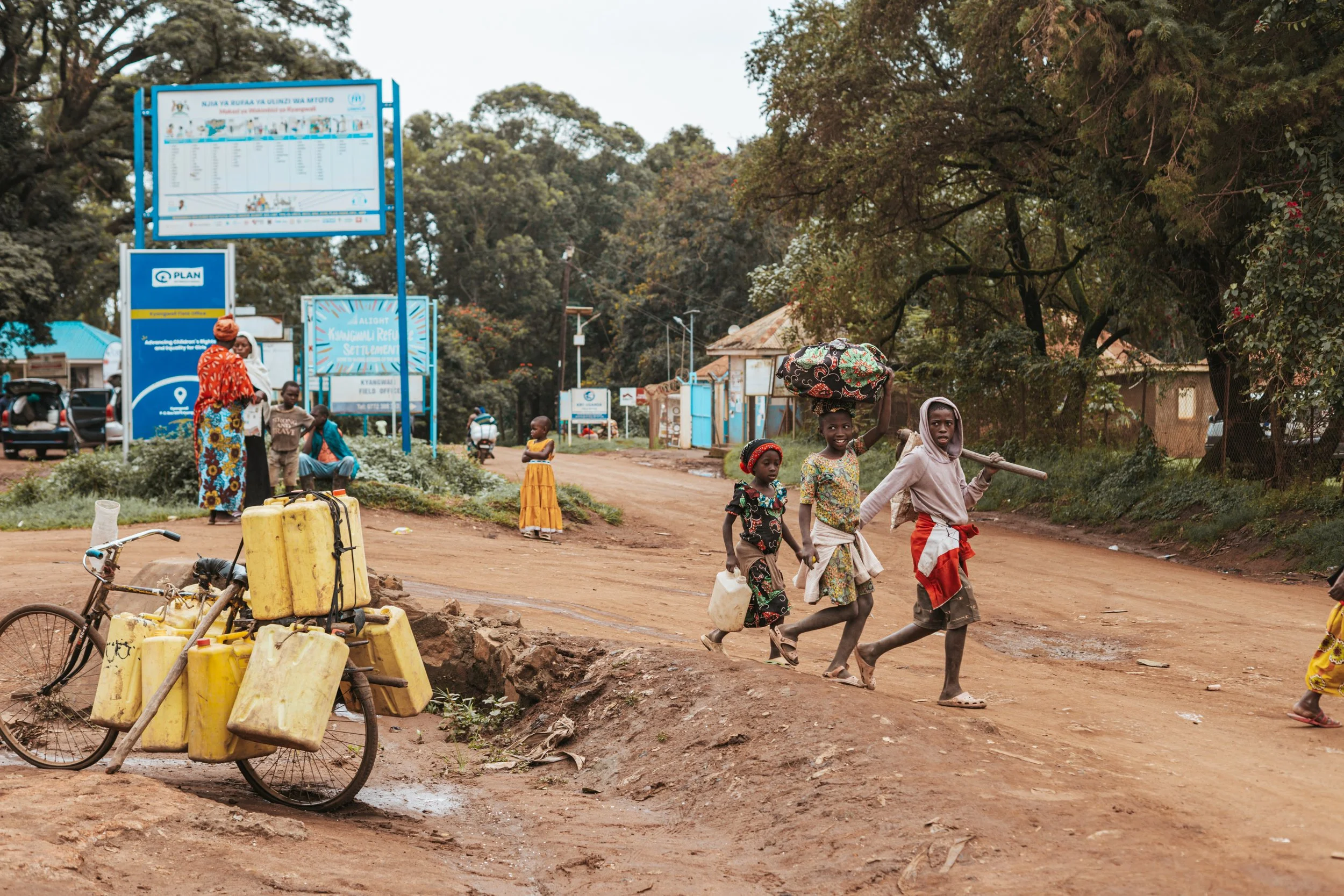
Children going about daily life in Kyangwali Refugee Settlement.
Why education is hard to hold onto
Education inside refugee settlements is fragile. Among school-aged refugee children worldwide, primary enrolment stands at 67% and falls to 37% at secondary level. For many children, meaningful access to education therefore ends well before adulthood.
In Kyangwali, Samuel saw how this played out. Boys who did not continue to secondary school often went into the bush to burn charcoal or make bricks for money. Girls were likely to get pregnant and marry young. Once school ended, the choices ahead often narrowed quickly.
Born in Kyangwali to parents who had fled the 1994 genocide in Rwanda, Samuel grew up in a family where neither parent had received formal education.
“I initially didn’t know what school was,” he says.
When his father eventually enrolled him in the nearby government primary school, one of only two in the settlement at the time, Samuel entered a classroom with around 250 other children. Desks were scarce and most students had to sit on the floor.
What a different kind of school looked like
What struck Samuel about P4T was less the school itself than how differently learning felt once he was there. After years in a class of around 250 pupils, he was now learning alongside just 14 others. The smaller class felt unfamiliar at first, but it also made school feel possible in a way it had not before. “I could actually hear what the teacher was saying and understand things much more easily,” he says.
The change showed quickly. His first test score rose from 16% to 48%. Samuel was excited, but his teacher was not as impressed. At his old school, 16% had been cause for congratulation but the shift in expectations triggered something inside of him. With support from his teachers, he began scoring in the 90s, became the top student in his class and was eventually able to study without paying tuition because of his performance.
Mathematics became his favourite subject, partly because of how his teacher Spencer spoke about it. Spencer often told the class that every problem had a solution, and Samuel found something grounding in that idea. Maths made problems feel understandable, even manageable, as though anything could be broken down and worked through if you looked at it closely enough. Social studies opened another way of thinking entirely. Through history, geography and lessons on leadership, he began to see how societies were shaped and how they might change. Both subjects fed the same instinct in him, the sense that problems, whether in an equation or a community, could be studied closely enough to act upon.
P4T also gave Samuel room to practise leadership early. He became assistant head boy in Primary 3, head boy in Primary 4, head prefect in Primary 5 and later led the debating club. These roles gave him a different sense of himself at a time when many children around him were finishing primary school without any clear route into secondary education.
“Before P4T, I didn’t understand myself and what I wanted to do with my life,” he says. “Before, I didn’t have hope that I would even continue with secondary school.”
Education became more than a way to pass exams. It helped him understand problems, build confidence and imagine responsibility beyond himself. The question that stayed with him was why this kind of education was still out of reach for so many others.
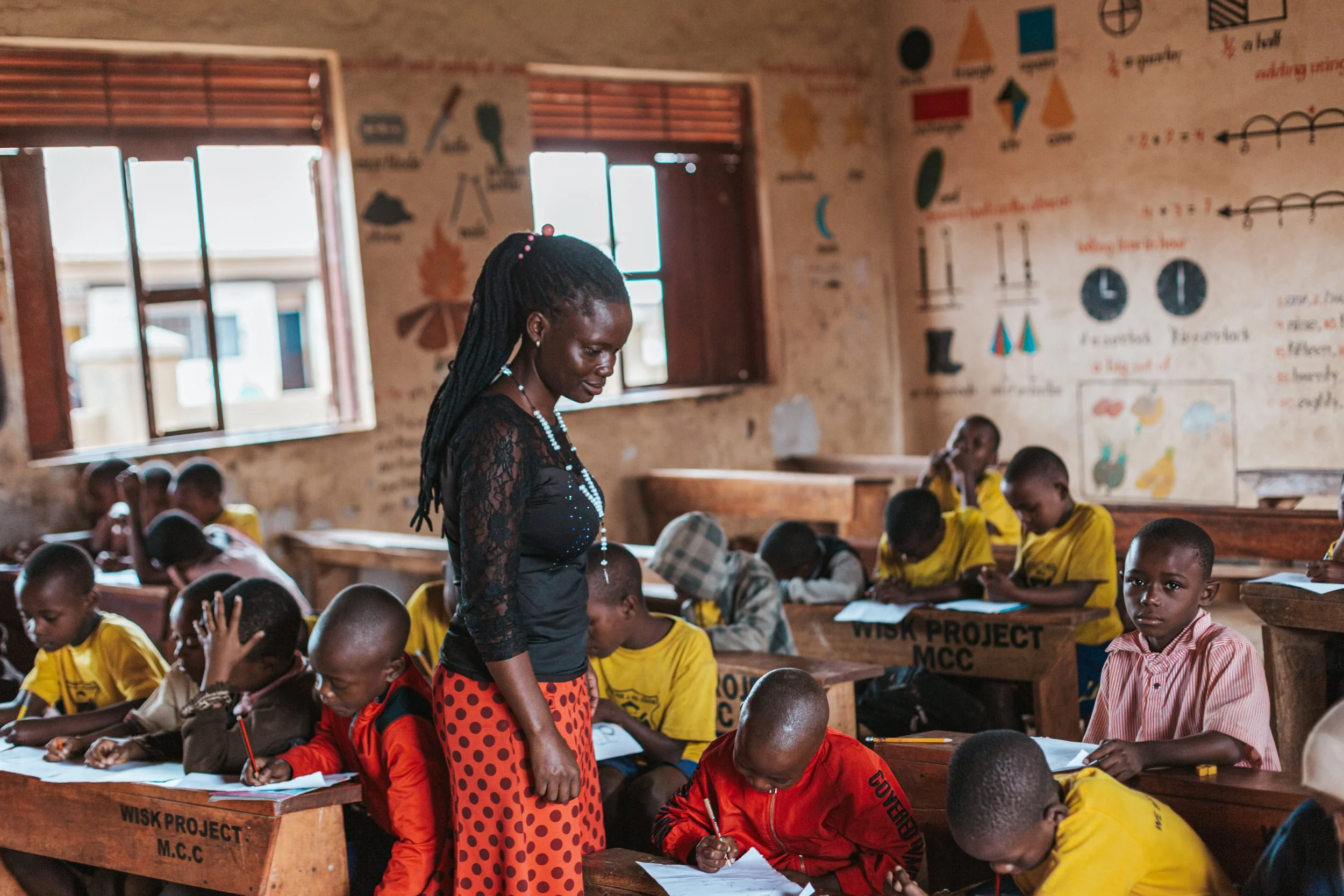
Teacher at P4T Primary School
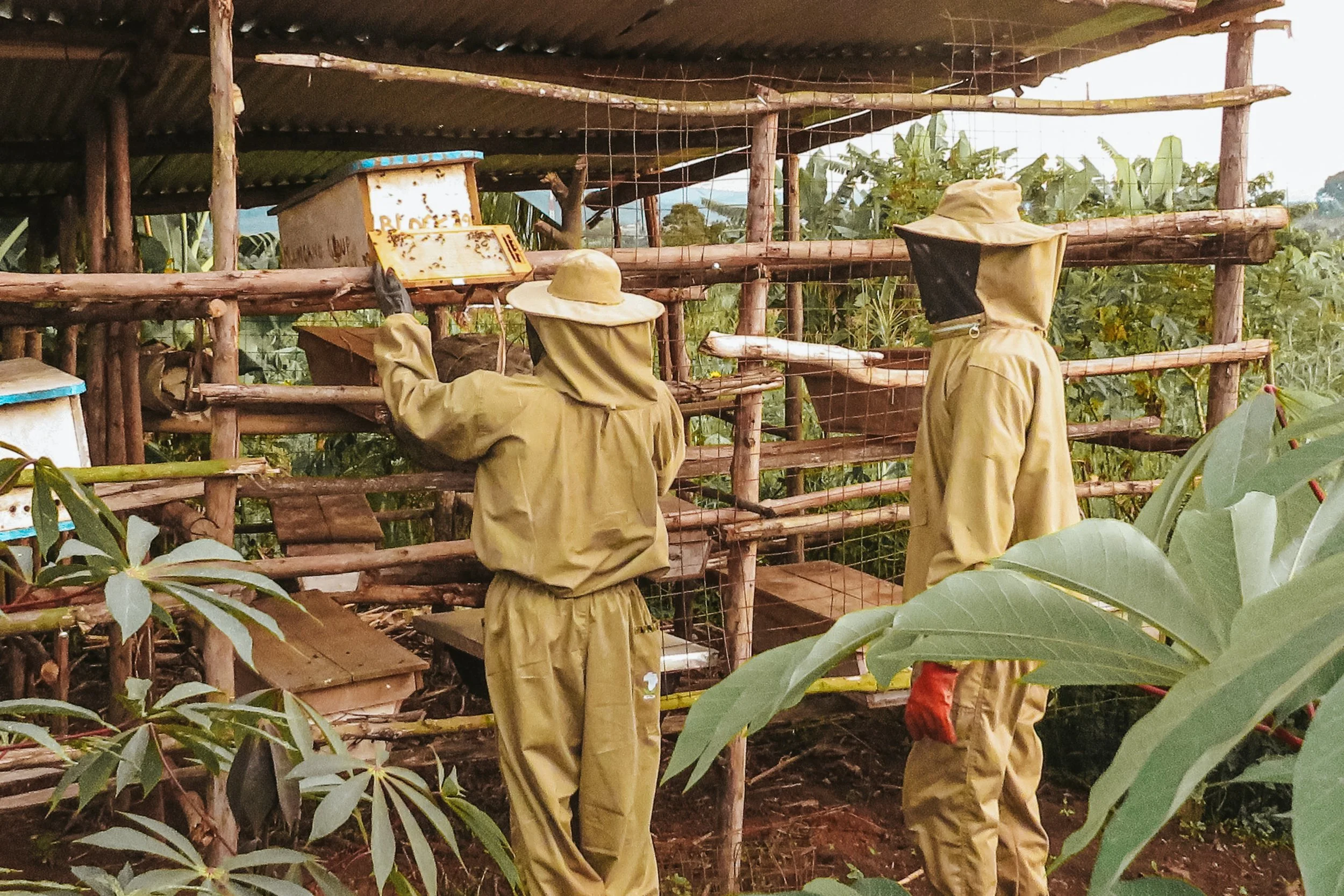
Samuel beekeeping with a fellow community member at OFTAC
What he learned, turned into something for others
In Secondary 1, at 14, Samuel began putting that question into practice. He founded Organisations for Transforming African Communities (OFTAC) to train families in beekeeping, a practice that requires little land and no full-time presence. OFTAC trained participants to build hives from materials they could find locally, so families could set up their own apiaries at minimal cost. This helped households bring honey products to market, with part of the income cycling back so OFTAC so they could reach more families, while the rest went directly to household budgets. By the time Samuel graduated, 79 households depended on beekeeping as a more stable source of income, each earning up to $450 across two harvesting seasons each year.
For those households, the timing was significant as food assistance for refugees in Uganda had been falling for years due to declining donor funding, including the USAID cuts, and monthly cash assistance dropping from around $8.50 to $3.50 per person. Today, roughly half the refugee population receives nothing at all. Against that backdrop, the $450 per season that beekeeping can generate, twice a year, is a meaningful shift while also providing skills for families that they can continue to use and pass on.Not long after graduating, Samuel visited the nearby community of Kabale and found a problem that felt uncomfortably familiar. Children were learning under trees, with one teacher responsible for more than 300 pupils. For the preschool-age children, the ones who need someone to sit beside them and show them how to hold a pencil, there was effectively no teaching happening at all. Around the community, Samuel also saw people trying to respond by renting rooms and hiring unqualified teachers, but many of these small schools opened briefly and then closed, leaving children to start over again.
When he brought what he had seen back to his friends and classmates from P4T, they began talking about opening a school themselves. “We initially didn’t have the confidence,” he says. “We thought we cannot do this at all.”
The doubts were practical as much as personal. They had no land, no money for classrooms and no way to pay teachers. Samuel later described it as having a goal and about 2% of everything else required. Still, they began with what they had. Samuel contributed savings from honey sales, while one friend, Moses Kasereka, sold his only remaining plot of land in the DRC, crossing Lake Albert into a conflict zone to do so. Together, they bought 2.3 acres.
The land gave them a place to begin, but not yet the means to build. A volunteer later connected them to a family willing to hear their pitch, and the group of teenagers asked for support. To their surprise, they received $10,000 — enough to start putting up temporary structures and turn the idea into a school.
They called it Elimu Bright Schools, from the Swahili word for education.
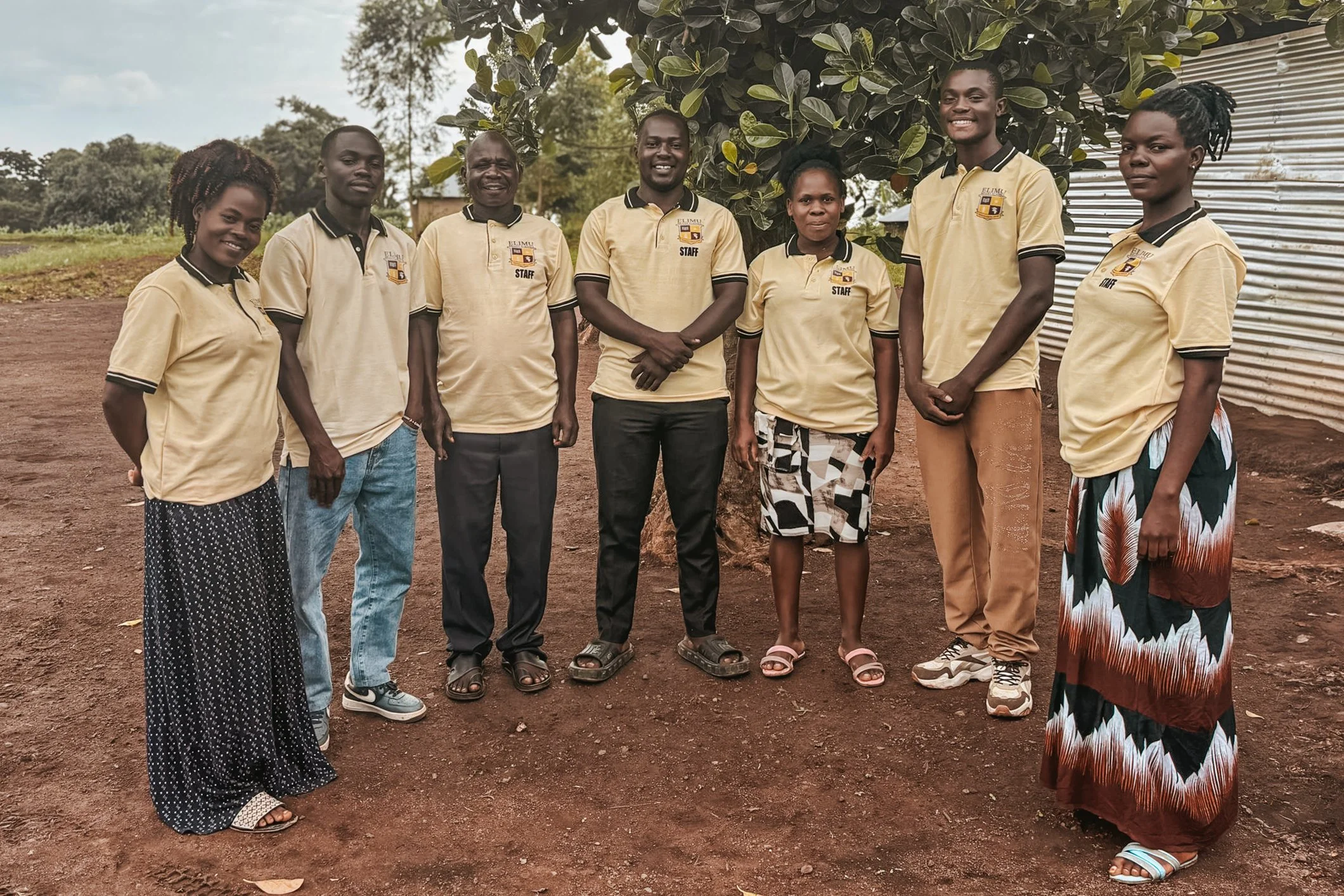
The team behind Elimu Bright Schools. From left: Napona Irakoze, Moses Kasereka, Onenichan Emmanuel, Samuel Usabuwera, Muganyizi Asumpta, Mugisa Latif and Kobusinge Suzan.
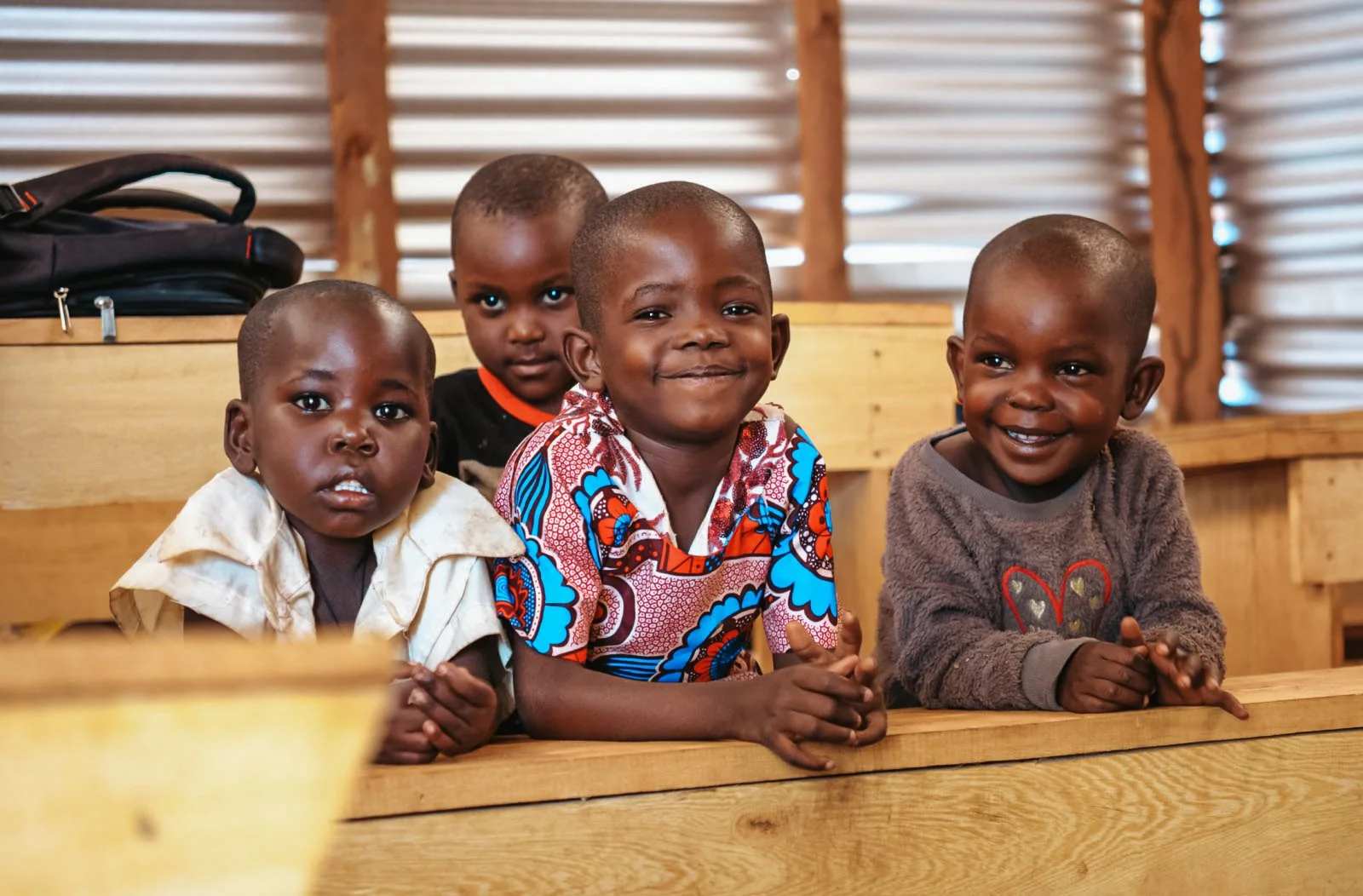
Learners at Elimu Bright Schools
Elimu Bright Schools
Today, Elimu Bright has 36 students, all from families with no formal educational background. Part of the school’s work is therefore also meeting with the parents, explaining why attendance matters and building towards an evening adult literacy programme so they can learn after the children’s school day ends as well.
The school also provides breakfast and lunch, which Samuel says makes it the only school in the community offering two meals a day. “I believe we brought something unique,” he says.
Elimu Bright is still small, though even in this early form it shows what education can become when someone who once lacked access finds the confidence and skills to build something for others. Samuel was 19 when he started it, carrying forward everything he had learned.
Johnam Kambasu, Finance Director at P4T, recognizes this too. "Samuel's initiatives, inspired by the training, mentorship, and values he acquired through P4T, are an exact testament to our belief," he says. "It demonstrates that when refugees are equipped with the right support and opportunities, they create sustainable solutions that transform lives far beyond their own." Kambasu has spent years working in this field, and in his experience it has been shown again and again that support channeled directly into refugee-led initiatives consistently delivers stronger ownership and better value for money.
This matters beyond just one school, as the World Bank estimates that each additional year of schooling raises hourly earnings by an average of 9%. In sub-Saharan Africa, where the working-age population is expected to double by 2050, education shapes not only individual futures but the economic and social possibilities of whole communities.
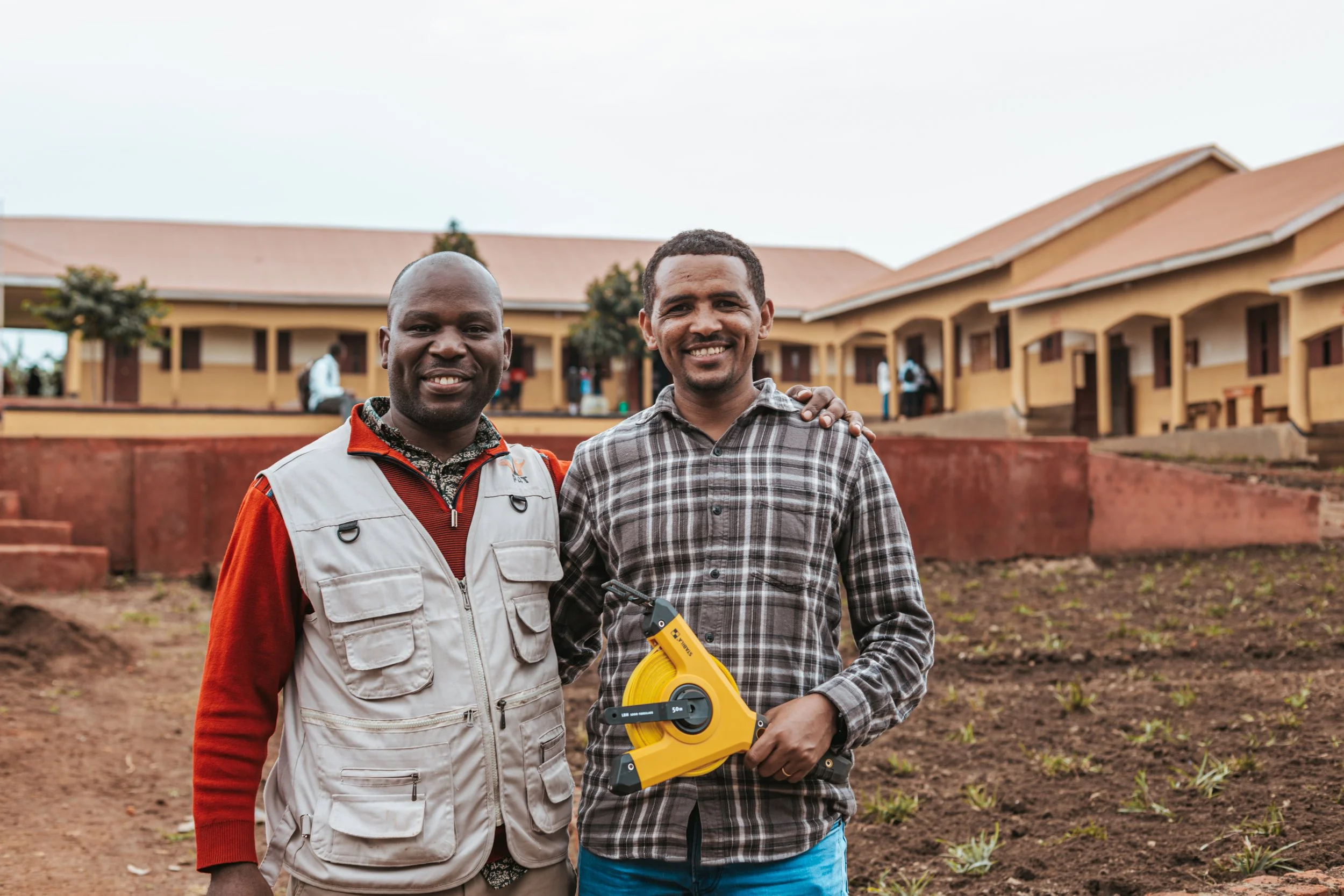
P4T’s Finance Director, Johnam Kambasu, and Aid Pioneers’ Head of Solar Engineering, Gimary Behre.
Why it matters who builds the school
When Samuel talks about P4T, he often returns to the fact that the people running the school understood refugee life from the inside. “They know how refugees live,” he says. “They understand the problems, because they are refugees themselves and have been for a very long time.”
That understanding shaped the school in practical ways. P4T knew which families were unlikely to afford fees, where students needed mental health support or guidance.
For Samuel, being taught by people who knew that reality also changed what he believed was possible for himself. “When people look at what I’ve achieved, it is inspiring even to people older than me,” he says. “Because they think it is not possible at a younger age. But my story is proof that one person believing in you can change a lot of things.”
His own story also showed him the limits of belief without access. His friend believed in Elimu Bright enough to sell his land in the DRC. Samuel believed in it enough to invest his savings from honey sales. But without the $10,000 that allowed them to begin building, the school might have remained only an idea.
Without access to finance and productive resources, Samuel says, “ideas remain ideas and talent remains talent.” That is also where Aid Pioneers’ work with P4T begins.
Our solar project at P4T
Aid Pioneers’ work with P4T starts from the same principle that runs through Samuel’s experience: the strongest ideas are already being built by people who understand their communities from within. Our role is to help connect organisations like P4T to the resources that make their work more reliable and sustainable.
Since last year, we have been working with P4T to transition its primary and secondary schools from an expensive and unreliable national grid to solar power. The installation, set to be finalised in the coming month, includes two solar systems, one for each school. Each system has a capacity of 32.4 kWp and is paired with a 34.8 kWh battery. Together, they will cover up to 76% of the schools' electricity needs.
For P4T, reliable power will affect how long students can study, whether computers can be used consistently, and how much money the school spends on expensive national grid power rather than education. Lower costs can free up resources for needs such as fee waivers for students whose families cannot afford tuition — something that shaped Samuel's path through school.
Reliable power lets P4T use more of its resources where they matter: on learners, on teachers, and on the community around them.
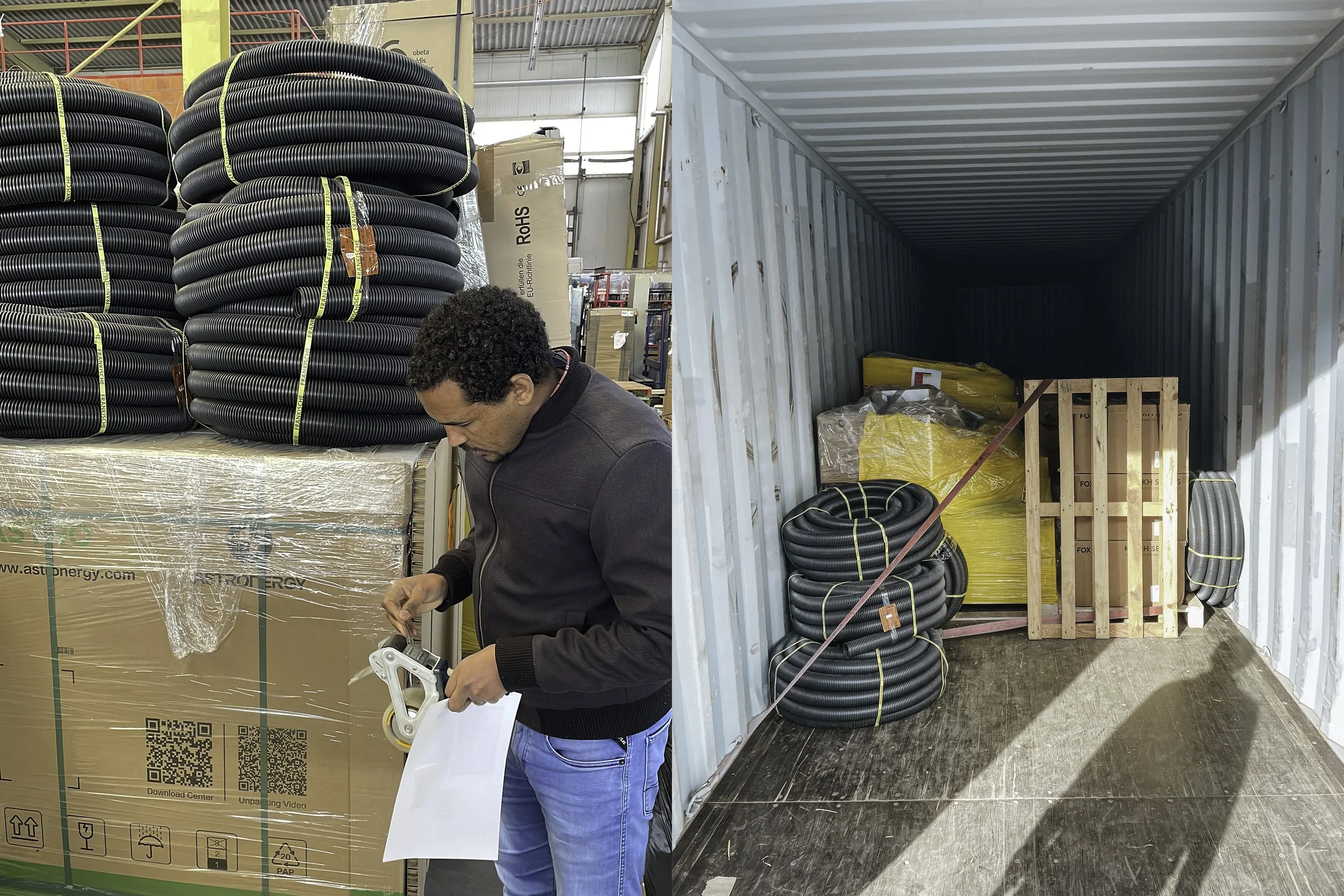
Solar equipment being loaded in Germany ahead of shipment to P4T's Primary and Secondary Schools.
Where this goes
Samuel’s ambitions extend beyond Elimu Bright. One day, he hopes to work in government, where he can influence the policies and funding structures that shape what is possible in places like Kyangwali. Some barriers are too large for a single school to solve.
Kyangwali has been home to people in displacement for more than sixty years. Many children growing up there today may spend their whole lives within its boundaries. What they believe is possible depends partly on what they can see around them and what support they are met with.
Samuel once entered P4T expecting foreign teachers. Instead, he found refugees teaching refugees, and a school that helped him imagine a different path. Years later, he built a school of his own.
By supporting P4T’s transition to reliable solar power, we are helping strengthen the kind of school that once changed Samuel’s path — and that may now give another child in Kyangwali the confidence and skills to build something for others.
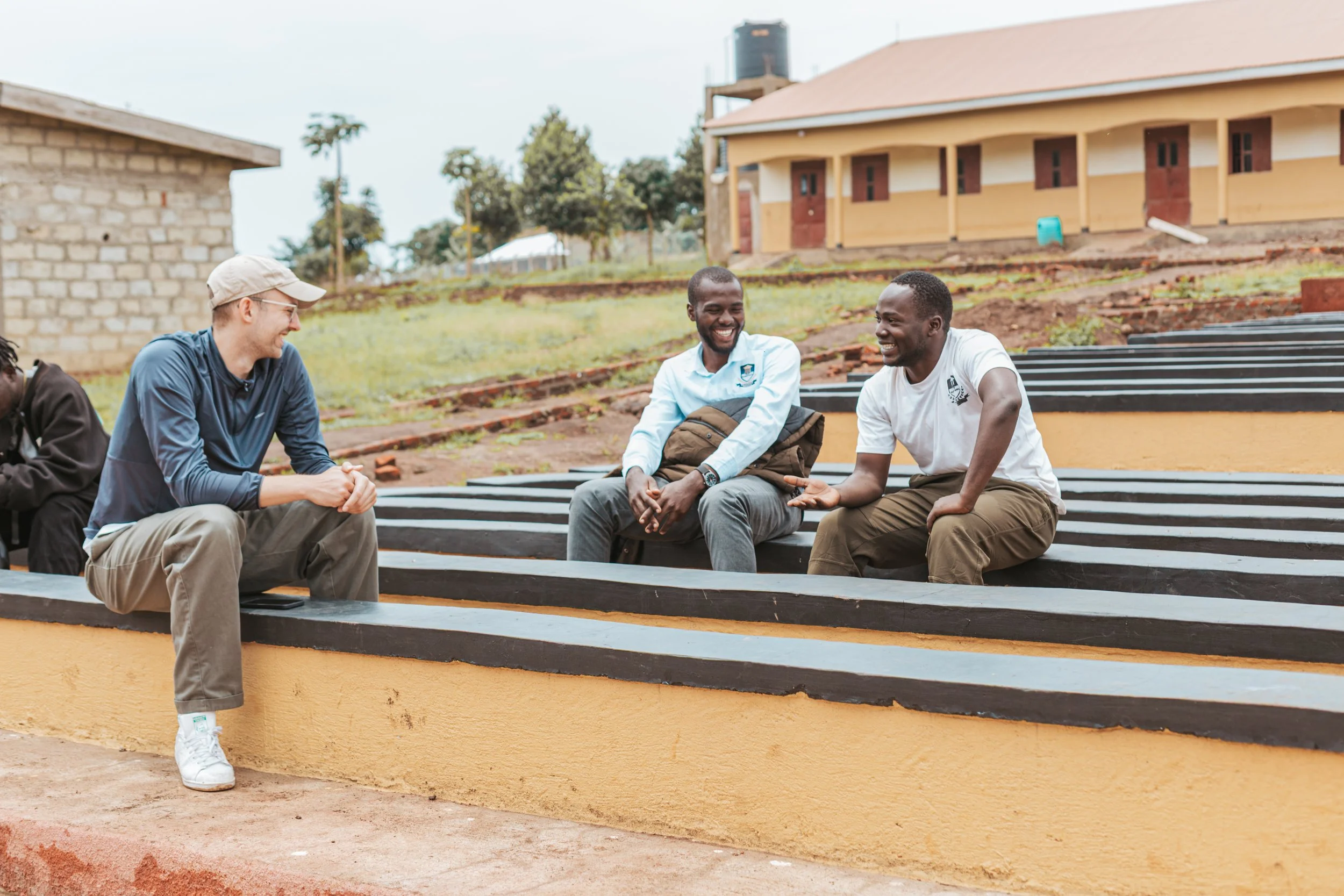
Students Maritazari Twahirwa and Samuel Usabuwera with Aid Pioneers Operations Manager Jonas Grundmann at the Secondary School.
